SKY-HIGH LIFESAVERS: DRONES SET TO SPEED UP EMERGENCY HEART CARE
Innovative research is paving the way for a new era of emergency response, as trials demonstrate that drones can rapidly deliver life-saving defibrillators to patients experiencing cardiac arrests. By bypassing road traffic and reaching remote locations, this technology aims to significantly improve survival rates for out-of-hospital emergencies.
The story in 20 seconds
20UK survival rate for out-of-hospital cardiac arrests is currently below 10%.
There are more than 40,000 out-of-hospital cardiac arrests in the UK annually.
Early use of an AED can at least double a patient's chance of survival.

A New Dawn for Emergency Response
In the quiet corners of our countryside and the bustling streets of our towns, a revolution in medical care is taking flight. For years, the emergency services have faced a race against time, particularly when dealing with cardiac arrests outside of hospital settings. With over 40,000 such incidents occurring across the UK every year, the pressure on responders is immense. Currently, survival rates for these out-of-hospital events sit stubbornly below ten percent. However, a pioneering collaboration between researchers at the University of Warwick, the University of Surrey, and dedicated teams from the Welsh Ambulance Services University NHS Trust, SECAmb, and the Air Ambulance Charity Kent Surrey Sussex is turning the tide. By looking to the skies, these experts are working to rewrite the future of emergency care.
Cutting Through the Traffic
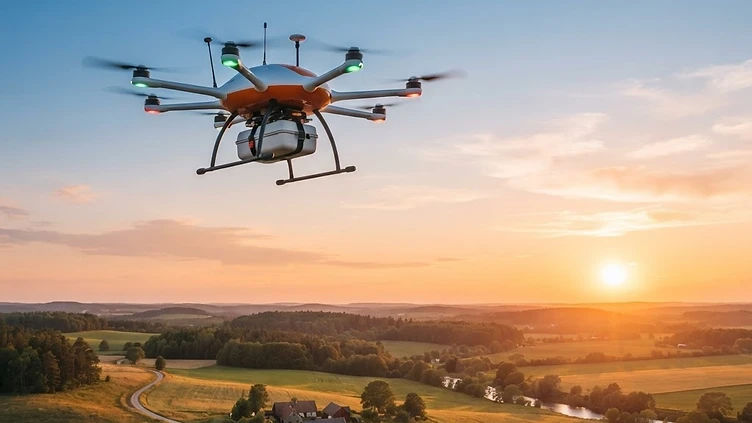
When a cardiac arrest strikes, every single second counts. The primary obstacle for traditional ground-based ambulance teams is often the unpredictable nature of our road networks. Traffic congestion and the sheer distance to remote or rural locations can turn a manageable emergency into a tragedy. This is where the innovative application of drone technology offers a beacon of hope. By navigating the air, these drones can bypass the gridlock that frequently delays life-saving equipment. The core of this research involves the deployment of automated external defibrillators, or AEDs, directly to the scene of an emergency via unmanned aerial vehicles. The have already proven that this approach can dramatically reduce the time it takes for essential medical equipment to arrive at a patient’s side.
Precision Engineering and Care
The logistics of such a system are as impressive as the goal itself. Over a rigorous 16-month project focused on the South East, researchers have been fine-tuning the delivery processes, ensuring that these drones can integrate seamlessly with existing 999 protocols. It is not just about the flight path; it is about the entire chain of survival. The trials have successfully tested the technical capabilities of the drones, including automated flight patterns and the delicate precision of winch delivery, ensuring the AED reaches the ground safely and effectively. Crucially, the system is designed to work in tandem with human guidance. Once the drone delivers the defibrillator, the bystander on the scene is supported by emergency call handlers, who provide the necessary coaching to use the device. This marriage of high-tech hardware and human expertise is exactly what is needed to bridge the gap between an emergency call and the arrival of an ambulance.
A Path to Higher Survival
The motivation behind this intensive research is clear and compelling. We know that intervention is the single most effective way to improve outcomes for cardiac arrest patients. The use of an AED in those vital early minutes can at least double a person’s chance of survival. By deploying drones to reach patients in areas where traditional vehicles might struggle, the researchers aim to make this life-saving intervention accessible to more people than ever before. Whether it is a remote village in Wales or a suburban street in the South East, the ability to get an AED to a patient within minutes could be the difference between life and death. The goal is simple yet profound: to transform those current, low survival statistics by ensuring that help is not just coming, but arriving rapidly and efficiently.
Looking Toward a Brighter Horizon
As the research continues, the implications for the future of the NHS and emergency care across the UK are deeply optimistic. We are moving toward a time where the phrase 'emergency response' encompasses more than just the flashing lights of an ambulance on the tarmac; it includes the rapid, unseen work of technology working for our benefit. The ongoing trials represent a significant step forward, showing that the sky is no longer a limit, but a new frontier for saving lives. While there is still work to be done, the success of these trials provides a solid foundation for a more resilient and responsive healthcare system. By embracing these advancements, we are moving closer to a future where thousands of lives can be saved every year, ensuring that when the worst happens, the best possible support is only minutes away, descending from the sky to provide a second chance at life.
Originally reported by
All rights in the original reporting remain with the publishers below.
Originally reported by theguardian.com. Our feature is written independently from verified facts — please support the original reporting:
Read the original storyRelated Wins

 Health
Young Champion’s Marathon Effort Boosts Children’s Hospital
A dedicated nine-year-old from Merseyside has completed an impressive 43-mile challenge to raise vital funds for Alder Hey Children’s Hospital. This remarkable feat of endurance highlights the community's commitment to supporting the world-class medical care provided to children across the region.
North of England · 4 hours ago

 Environment
New Vision for Bristol’s Industrial Heart
A major urban regeneration project in Bristol is set to transform 95 hectares of underutilised industrial land into a vibrant, people-centred neighbourhood. The ambitious masterplan prioritises community wellbeing by introducing a car-free canalside promenade, extensive green spaces, and new local amenities.
London & South · 4 hours ago

 Science
LIFE BEYOND EARTH: MICROBIAL DISCOVERY STRENGTHENS CASE FOR ALIEN HABITATS
Scientists have successfully demonstrated that Earth-based microorganisms can thrive in laboratory environments mimicking the extreme conditions found within the subsurface ocean of Saturn’s moon, Enceladus. This breakthrough provides compelling evidence that the icy moon possesses the necessary chemical and environmental stability to potentially support extraterrestrial life.
London & South · 4 hours ago
The Sunshine Digest
One bright email each week — verified good news only, unsubscribe in a click.