VICTORIAN ICON’S GREEN REBIRTH: KEW GARDENS UNVEILS WORLD-FIRST NET-ZERO RENOVATION
The Royal Botanic Gardens, Kew, is undertaking a massive renovation of its iconic Palm House in Richmond, London, to future-proof the 19th-century structure. By replacing fossil-fuel heating with high-tech electric heat pumps and sealing thousands of individual glass panes, the project aims to achieve a world-first net-zero status for a heritage glasshouse. While the work involves the complex task of relocating and propagating a vast collection of rare tropical species, the initiative ensures the survival of this botanical sanctuary for the next century. This transformation is a key step in Kew’s broader mission to reach climate-positive status across its entire site by 2030.
The story in 20 seconds
20The Palm House at the Royal Botanic Gardens, Kew, is a Grade I listed building and a centrepiece of a UNESCO World Heritage site in London.
The renovation project is budgeted at approximately £60 million to safeguard the structure and its botanical collection.
The project aims to make the Palm House the world’s first heritage glasshouse to achieve net-zero carbon emissions.
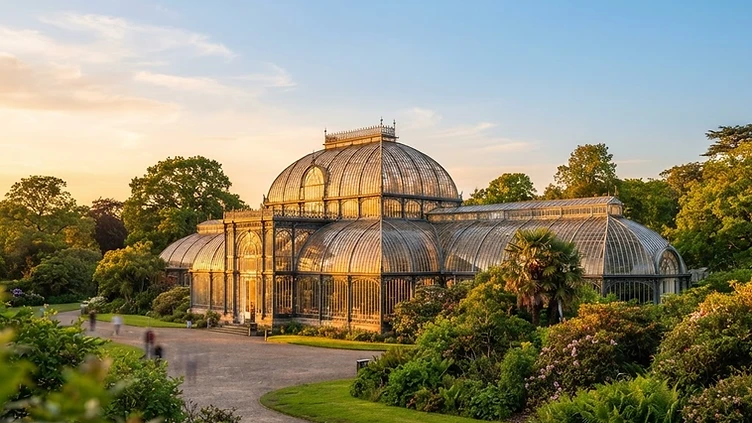
A Victorian Marvel for the Modern Era
The iconic at the , Kew, has long stood as a triumph of Victorian engineering and a beloved fixture of the Richmond skyline. Since it first welcomed the public in 1848, this magnificent structure, designed by the visionary architect and the innovative ironfounder Richard Turner, has served as a sanctuary for some of the world’s most vulnerable plant life. By utilizing groundbreaking ironwork techniques borrowed from the shipbuilding industry of the mid-19th century, the creators of this Grade I listed building crafted an enduring masterpiece that defines a UNESCO World Heritage site. Today, this treasure is poised for a remarkable transformation that bridges the gap between its historic origins and a sustainable future. As part of a monumental £60 million restoration project, is set to become the world’s first heritage glasshouse to achieve net-zero carbon emissions, setting a standard for preservation projects across the globe.
Engineering a Green Legacy
The sheer scale of the challenge involved in upgrading a 19th-century architectural icon is immense, yet the motivation remains clear. Currently, this singular glasshouse contributes approximately 20% to the total carbon footprint of . Addressing this impact is a cornerstone of the organisation’s ambitious mission to achieve climate-positive status throughout the entire site by 2030. When structural work commences in 2027, a five-year journey of transformation will begin, effectively future-proofing the sanctuary for the next hundred years. Central to this environmental revolution is the replacement of aging, fossil-fuel-dependent gas boilers. These will be swapped for high-tech, sustainable electric air and water heat pumps, a transition that marks a definitive shift toward clean energy for a structure that has relied on traditional heat sources for generations. The physical integrity of the house is equally vital to its new mission. A meticulous overhaul of all 16,500 individual panes of curved glass is required; each piece will be replaced and sealed with bespoke silicone gaskets to prevent heat loss, ensuring the constant, humid tropical climate of 20 to 28 degrees Celsius can be maintained with minimal energy waste.
Protecting Rare Treasures
While the building undergoes its structural metamorphosis, the true heart of the project lies in the care of its inhabitants. The Palm House is home to a staggering 1,300 species of tropical plants, many of which serve as vital pillars for global research into biodiversity, essential medicines, and the future of global food security. Among these are rare species already considered extinct in the wild, making the ongoing work of Kew’s absolutely critical. These experts are currently busy propagating cuttings from these rare collections to ensure that the genetic legacy of the glasshouse is protected throughout the restoration period. This delicate botanical stewardship ensures that despite the intensity of the five-year project, these priceless natural specimens will continue to thrive. The project’s commitment to education is equally evident, as the renovation includes the creation of a brand-new circular gathering space at the core of the building. This addition is specifically designed to deepen visitor understanding of rainforest conservation, inviting the public to engage more closely with the urgent work of preserving our natural world.
A Model for Global Sustainability
The significance of this project extends far beyond the borders of London. By proving that even the most historic and complex heritage sites can be retrofitted to meet modern, rigorous environmental standards, Kew Gardens is providing a blueprint for sustainable conservation. The potential grant of up to £10 million from reflects the national importance of this undertaking, acknowledging that we must safeguard our history while acting decisively on our climate responsibilities. As the basement’s heating and irrigation infrastructure undergoes a comprehensive overhaul to increase operational resilience, the Palm House is being prepared to serve as a beacon of longevity. This is a story of balance—honouring the genius of Decimus Burton and Richard Turner while ensuring their work remains relevant in a world that demands a greener approach. When the dust finally settles in a few years, the Palm House will stand not only as a monument to 19th-century ingenuity but also as a shining example of how a historic site can lead the charge in the fight for a healthier planet. Through this careful marriage of innovation and preservation, the Royal Botanic Gardens, Kew, is ensuring that its most iconic glass sanctuary remains a thriving, sustainable sanctuary for generations to come.
Originally reported by
All rights in the original reporting remain with the publishers below.
Originally reported by ‘Sad moments ahead’: Kew Gardens to fell rare trees in race to save Victorian greenhouse. Our feature is written independently from verified facts — please support the original reporting:
Read the original story- ‘Sad moments ahead’: Kew Gardens to fell rare trees in race to save Victorian greenhouse
- Plans submitted to renovate Kew’s iconic Palm House into the first net-zero glasshouse of its kind
- Kew Gardens greenhouses to become "first net-zero glasshouses"
- Palm House renovation project | Kew
- Kew Garden: Palm House set for major renovation
- Kew Gardens tropical Palm House to close for net-zero makeover
Related Wins

 Sport
SportCHESS PRODIGIES BREAK BARRIERS IN NATIONAL LEAGUE DEBUT
The 'She Plays to Win' Lionesses have made history by competing in the top division of the Four Nations Chess League, marking the culmination of three consecutive promotions. Despite facing unique regulatory challenges regarding team composition, the squad continues to demonstrate exceptional skill and camaraderie at the highest level of British chess.
London & South · 4 hours ago

 Science
NEW PATHWAYS TO DIAGNOSIS: CAMBRIDGE STUDY SHEDS LIGHT ON AUTOIMMUNE HEALTH
A landmark study from the University of Cambridge is paving the way for more accurate medical care by highlighting critical gender disparities in the diagnosis of autoimmune conditions. By identifying how and why these misdiagnoses occur, researchers are providing the evidence needed to ensure patients receive faster, more effective support for their physical health.
London & South · 4 hours ago

 Environment
A NATURAL REVIVAL FOR BARNES GREEN
A major river restoration project has successfully transformed the Beverley Brook at Barnes Green into a thriving, natural habitat. This initiative has introduced a meandering river channel and a new island, significantly boosting local flood resilience and biodiversity.
London & South · 10 hours ago
The Sunshine Digest
One bright email each week — verified good news only, unsubscribe in a click.