UK mathematician debunks myth around Parthenon’s optical illusions
A UK mathematician has provided compelling evidence that the iconic curves of the Parthenon were not intentional design choices meant to correct optical illusions, challenging a narrative that has persisted for over two millennia.
The story in 20 seconds
20The study was conducted by Professor Alain Goriely, a mathematician based in the UK.
The research was published in a paper titled 'The illusion of illusions: There are no optical corrections in the Parthenon.'
The paper was first submitted in October 2025 and revised in April 2026.
A Mathematical Rethink of History
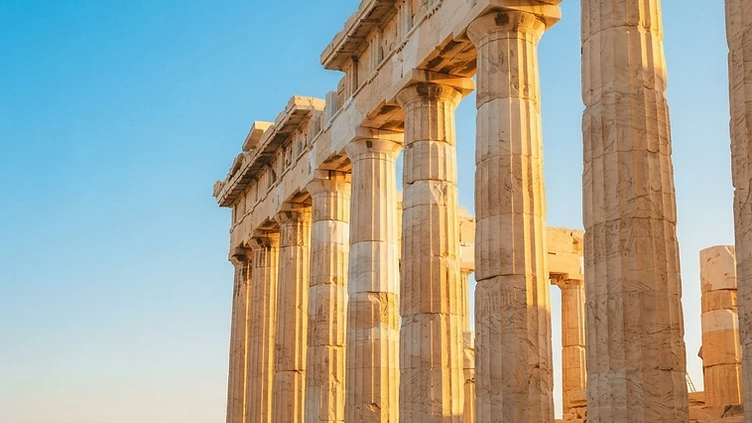
For well over two thousand years, the has stood as the ultimate pinnacle of ancient Greek architectural genius. It is a structure that has captured the imagination of historians, architects, and tourists alike, serving as a silent witness to the evolution of human civilization. For generations, the narrative surrounding this Athenian masterpiece has remained consistent, bolstered by the belief that its creators were masters of manipulation. We have long been told that the Parthenon features a series of intentional optical corrections, clever adjustments made by master builders to counteract the natural failings of human perception. Yet, a ground-breaking study conducted within the United Kingdom is now challenging these long-held assumptions, suggesting that our understanding of this iconic temple may have been built on a foundation of myth rather than architectural fact.
, a distinguished mathematician based in the UK, has stepped forward to re-examine the structural data that has defined the temple’s reputation. His research, captured in a compelling paper titled 'The illusion of illusions: There are no optical corrections in the Parthenon,' offers a rigorous, evidence-based challenge to the traditional story. First submitted in 2025 and finalized through revisions by April 2026, Professor Goriely’s work strips away centuries of academic speculation to reveal a much simpler, more grounded reality. By applying a mathematical lens to the temple's profiles, he has provided evidence that the supposed optical corrections are likely either non-existent or completely imperceptible to the human eye.
Unravelling a Two-Millennium Myth
To understand the magnitude of this discovery, one must look at how the legend grew. The notion that the Parthenon was designed to be 'perceptually perfect' gained massive momentum during the 19th century, a time when researchers became fascinated by measuring the temple’s curved profiles. These early scholars theorized that the Greeks, in their pursuit of harmony, built in at least twelve different The most famous claim was that straight lines were purposefully curved to prevent the '' effect that our brains supposedly perceive when viewing long, flat surfaces. For centuries, this theory has been taught in classrooms and architectural institutes as an , cementing the idea that the Parthenon was a monument designed specifically to trick the eye into seeing absolute perfection.
Professor Goriely’s findings strike at the heart of this romanticized narrative. His research suggests that what we have long interpreted as deliberate aesthetic adjustments may have been misidentified or entirely misinterpreted. By questioning whether these subtle curves were even designed with perception in mind, the study forces us to confront the possibility that the 'optical illusions' were, in fact, an illusion themselves. This is not merely an academic correction; it is a significant shift in how we interpret the ingenuity of the ancient world. The study provides a necessary scientific basis for questioning the traditional architectural story that has dominated discussions for so long, urging us to look at the Parthenon with a fresh, more empirical perspective.
A Fresh Perspective on Engineering
From a UK perspective, this research offers a wonderful opportunity to re-engage with ancient history through the clarity of modern science. By prioritizing evidence-based analysis, Professor Goriely encourages us to move away from the comfort of traditional myths and toward a more grounded appreciation of ancient Greek engineering. When we stop viewing the Parthenon as a building designed to manipulate human perception, we are free to admire it for what it truly is: a remarkable feat of structural design that stands on its own merit, without the need for manufactured legends of optical trickery.
This shift in focus does not diminish the grandeur of the temple; rather, it makes the achievement of its builders feel more tangible and accessible. It reminds us that even the most deeply held beliefs about our shared history deserve to be scrutinized and updated as our analytical tools improve. The work conducted here in the UK provides a bridge between the ancient world and contemporary mathematical rigour, proving that there is always more to learn about the monuments that have defined our cultural landscape for millennia. As we look ahead, this research invites both scholars and the public to approach architectural history with a renewed sense of curiosity, grounded in facts and verified by the power of modern enquiry. It is an optimistic step forward for the field of archaeology, demonstrating that even after thousands of years, the story of the Parthenon is still being written by those brave enough to question the status quo.
Originally reported by
All rights in the original reporting remain with the publishers below.
Originally reported by theguardian.com. Our feature is written independently from verified facts — please support the original reporting:
Read the original storyRelated Wins

 Culture
PRIME RESCUE: SOUTH LONDON MONKEY FINDS SAFETY
A small primate discovered in distressing conditions in a South London home has been successfully rescued by a multi-agency team. The animal is now receiving expert care following a collaborative intervention to ensure its welfare and safety.
London & South · 1 hour ago

 Health
STADIUM PARTNERSHIP TACKLES PERIOD POVERTY IN BRISTOL
Bristol City Women and Ashton Gate Stadium have partnered with Natracare to provide free, plastic-free period products to players, staff, and visitors, aiming to tackle period poverty and promote inclusivity in sport.
London & South · 7 hours ago

 Environment
Wildlife arrives on time at rewilded chalk grasslands built along HS2 route
A major rewilding project along the HS2 route in the Colne Valley is proving to be a resounding success as birds and insects return to newly created chalk grasslands. Despite the ongoing construction of the high-speed railway, the Western Slopes initiative has successfully transformed former agricultural land into a thriving sanctuary for local biodiversity.
London & South · 7 hours ago
The Sunshine Digest
One bright email each week — verified good news only, unsubscribe in a click.