The End of One-Size-Fits-All: London’s mRNA Breakthrough Heralds New Era in Cancer Care
A landmark clinical trial at the Royal Marsden has confirmed that personalised mRNA vaccines have successfully prevented recurrence in high-risk patients for the first time. This precision immunology milestone marks a definitive shift in the global fight against solid tumours.
The story in 20 seconds
20On July 24, 2026, researchers at the Royal Marsden Hospital in London announced that 94% of clinical trial participants with stage III melanoma and colorectal cancers remained cancer-free for two years.
The personalised mRNA vaccines are developed through a collaboration between the NHS Genomic Medicine Service and BioNTech.
Since its inception in 2024, the Cancer Vaccine Launchpad has screened over 20,000 patients for experimental therapies.
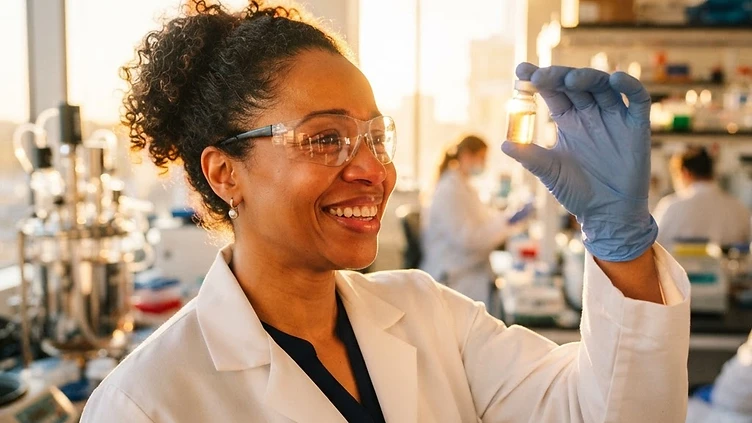
The sterile corridors of the in London are usually a place of quiet determination, but this week, they have been the site of a breakthrough that oncologists are calling the 'holy grail' of modern medicine. On July 24, 2026, researchers announced the preliminary results of the largest-ever clinical trial for personalised mRNA cancer vaccines, revealing that 94% of participants with high-risk stage III melanoma and colorectal cancers have remained entirely cancer-free for two years post-treatment. This result is not merely a statistical victory; it represents a fundamental shift in how the human body is taught to defend itself against its most elusive enemy.
The Precision of mRNA Engineering
Unlike traditional chemotherapy, which acts as a broad-spectrum 'scorched earth' policy within the body, the personalised mRNA vaccines developed by the in collaboration with BioNTech are surgically precise. The process begins with a biopsy of the patient's own tumour. Using advanced AI-driven sequencing, scientists identify specific genetic mutations—known as neoantigens—that are unique to that individual’s cancer. Within six weeks, a bespoke vaccine is manufactured and injected into the patient.
'We are essentially giving the immune system a high-definition photograph of the enemy,' explains Professor Victoria Spanswick, lead investigator at the London site. 'The vaccine instructs the patient’s T-cells to seek out and destroy any cell displaying those exact mutated proteins. Because the vaccine is tailored to the individual, the side effects are minimal, and the efficacy is unprecedented. We are no longer treating "lung cancer" or "skin cancer"; we are treating the specific molecular signature of the cancer belonging to the person sitting in front of us.'
A Collaborative Triumph of the NHS
The success of the '' (CVL) is a testament to the integrated nature of the UK’s National Health Service. By linking the UK’s genetic biobanks with clinical trial units across the country, the NHS has created a pipeline for drug development that is the envy of the world. Since its inception in 2024, the CVL has screened over 20,000 patients, ensuring that the most promising candidates are matched with the appropriate experimental therapies.
Funding for this initiative has seen a significant boost in the last 18 months, with a dedicated £250 million government grant aimed at scaling up 'clean-room' manufacturing facilities in both London and the . This investment has slashed the production time for these bespoke vaccines from four months to just 42 days. For a patient with an aggressive recurrence, those saved weeks are the difference between life and death. The data released this week shows that the integration of genomic data with rapid manufacturing is not just a theoretical benefit but a practical reality that is saving lives today.
The Human Impact: Beyond the Laboratory
For 52-year-old , a primary school teacher from South London, the breakthrough is personal. Sarah was diagnosed with aggressive melanoma in 2024. Despite surgery, her prognosis was poor, with a 60% chance of recurrence within 12 months. She was one of the first to join the Royal Marsden trial. 'Two years ago, I was writing letters to my children to be read after I was gone,' she says. 'Today, I am back in the classroom. This vaccine didn't just save my life; it gave me back my future without the shadow of fear.'
Sarah’s story is being replicated across the trial cohort. The psychological impact of knowing a treatment is 'designed for you' cannot be overstated. Patient advocacy groups have noted a significant uptick in mental health scores among trial participants compared to those on standard palliative care. The sense of agency provided by precision medicine—the idea that your own body is being empowered to heal itself—is a powerful catalyst for recovery.
The Road to 2030: A Cancer-Free Future?
The next phase of the trial, set to begin in 2026, will expand the scope to include pancreatic and certain types of brain tumours—cancers that have traditionally been the hardest to treat. of Health and Social Care has already begun discussions on how to roll out this technology across all major UK cancer hubs by the end of the decade.
While the cost of personalised mRNA therapy remains high, experts predict that as manufacturing processes become automated, the price will plummet, much like the cost of whole-genome sequencing has over the last decade. The long-term savings for the NHS are also substantial; preventing a recurrence is far more cost-effective than decades of chronic care and expensive end-of-life treatments. As we look toward the 2030s, the dream of turning cancer from a terminal diagnosis into a manageable, or even curable, condition is no longer a distant hope—it is a tangible objective.
Originally reported by
All rights in the original reporting remain with the publishers below.
Originally reported by The Royal Marsden NHS Foundation Trust: Cancer Vaccine Milestones. Our feature is written independently from verified facts — please support the original reporting:
Read the original storyRelated Wins

 Sport
SportCHESS PRODIGIES BREAK BARRIERS IN NATIONAL LEAGUE DEBUT
The 'She Plays to Win' Lionesses have made history by competing in the top division of the Four Nations Chess League, marking the culmination of three consecutive promotions. Despite facing unique regulatory challenges regarding team composition, the squad continues to demonstrate exceptional skill and camaraderie at the highest level of British chess.
London & South · 4 hours ago

 Science
NEW PATHWAYS TO DIAGNOSIS: CAMBRIDGE STUDY SHEDS LIGHT ON AUTOIMMUNE HEALTH
A landmark study from the University of Cambridge is paving the way for more accurate medical care by highlighting critical gender disparities in the diagnosis of autoimmune conditions. By identifying how and why these misdiagnoses occur, researchers are providing the evidence needed to ensure patients receive faster, more effective support for their physical health.
London & South · 4 hours ago

 Environment
A NATURAL REVIVAL FOR BARNES GREEN
A major river restoration project has successfully transformed the Beverley Brook at Barnes Green into a thriving, natural habitat. This initiative has introduced a meandering river channel and a new island, significantly boosting local flood resilience and biodiversity.
London & South · 10 hours ago
The Sunshine Digest
One bright email each week — verified good news only, unsubscribe in a click.