Solar Secrets Revealed: Record-Breaking Images Unmask the Sun’s Mysterious Atmosphere
Scientists have captured the highest-resolution images ever taken of the sun, revealing intricate golden bands and swirling plasma vortices. These unprecedented visuals provide a potential solution to the long-standing mystery of why the sun's outer atmosphere is significantly hotter than its surface.
The story in 20 seconds
20The new images represent the highest-resolution photography ever achieved of the solar atmosphere.
The visuals highlight "golden bands" and "swirling vortices" within the sun's plasma.
This data provides evidence to solve the "coronal heating paradox," a mystery that has puzzled astronomers for decades.

A New Dawn for Solar Science In the golden light of early August 2026, the global scientific community witnessed a milestone that shifted our understanding of our closest star forever. Thanks to a collaborative mission between international partners, including the diligent work of the UK Space Agency and the experts at University College London, we have finally glimpsed the sun in a way never before possible. These breathtaking images, representing the highest resolution photography ever captured of the solar atmosphere, offer a crisp, intimate look at the celestial furnace that governs life on Earth. As we look at these swirling patterns and intricate structures, we are not just seeing a distant object; we are witnessing the complex heartbeat of our solar system. This is a moment of triumph for researchers who have spent years waiting for such unprecedented clarity, transforming our view of the sun from a brilliant, blinding orb into a dynamic, textured landscape of magnetic energy.
Unlocking the Coronal Heating Paradox For decades, astronomers have been haunted by a curious puzzle known as the coronal heating paradox. While the sun’s visible surface, the photosphere, burns at a formidable 6,000 degrees Celsius, its outer atmosphere, the corona, reaches staggering temperatures exceeding 1 million degrees Celsius. It has long baffled the mind to consider how the atmosphere could be so significantly hotter than the surface it surrounds. With the release of these latest findings, the mystery is finally beginning to unravel. The captured data reveals magnetic field interactions acting as the engine for this extreme thermal surge. By observing the sun up close through the advanced lens of the Solar Orbiter mission, researchers have identified that these processes are far more turbulent and energetic than we once imagined. The puzzle, which has tested the limits of astrophysics for generations, has finally met its match in the high-definition lens of modern technology.
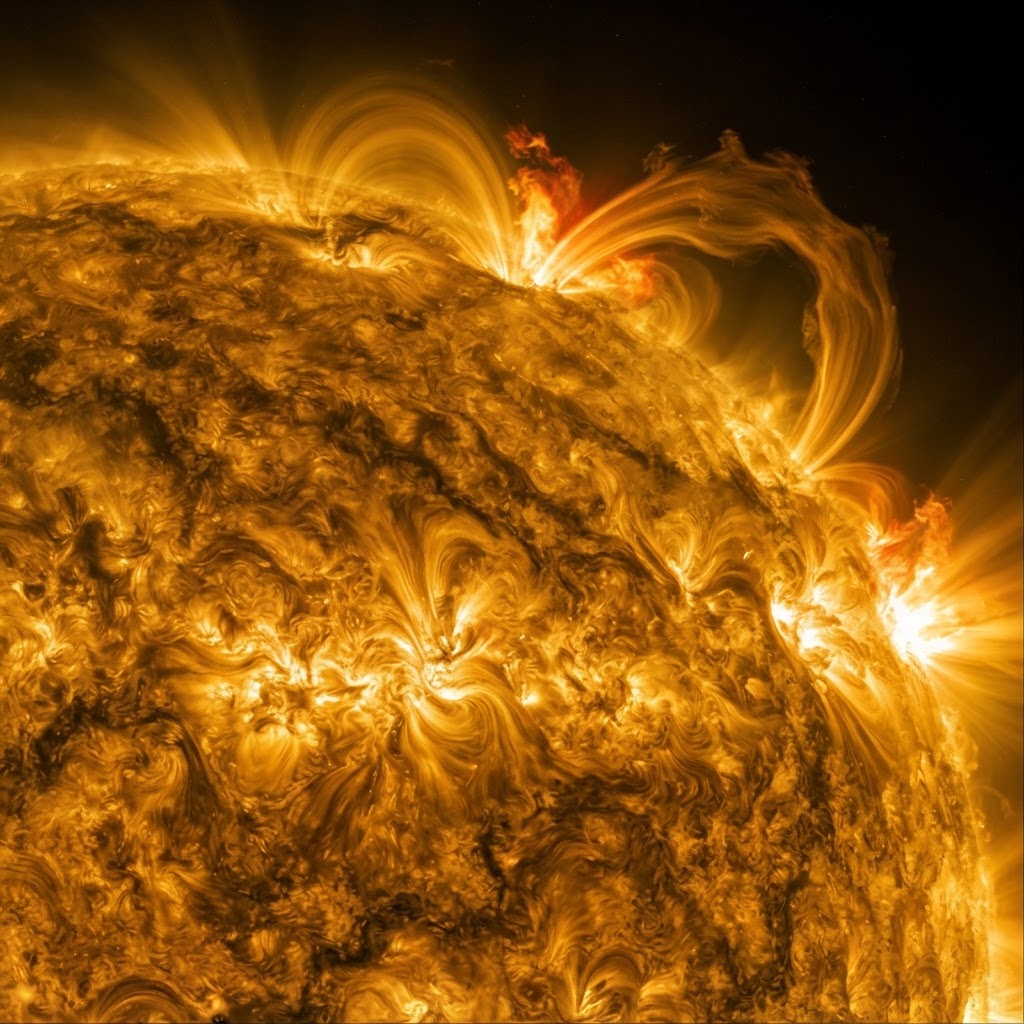
Golden Bands and Swirling Vortices What makes these images truly mesmerising are the detailed visuals of the plasma structures dancing across the star. The photography highlights stunning golden bands and swirling vortices that crisscross the solar atmosphere. These are not merely artistic shapes but are markers of immense power, showing us exactly how energy is distributed. Each of these structures spans merely tens of kilometers, a scale that was previously obscured by the glare of the star. Seeing these plasma ribbons curl and twist in real-time provides visual proof of the dynamic environment that defines the solar corona. These structures are the physical manifestation of magnetic braids, which we now know release massive amounts of energy into the atmosphere. It is a reminder that even at the scale of a star, the universe operates with a sense of intricate, rhythmic precision.
The UK Contribution to Space Exploration It is a source of immense pride that British researchers played such a pivotal role in this international triumph. The UK Space Agency has been a central pillar in the support of these solar research missions, ensuring that the necessary resources were available to push the boundaries of what we can see. Specifically, the team at University College London’s Mullard Space Science Laboratory has proven once again why they are a leading global center for solar instrumentation and sensor development. Their expertise in creating the sensitive tools capable of capturing this level of detail allowed the Solar Orbiter to perform its mission with flawless execution. This achievement is a testament to the talent and dedication found within the UK’s scientific community. By leading the charge in sensor development, British scientists have ensured that we have the clearest possible window into the sun’s mysterious processes.
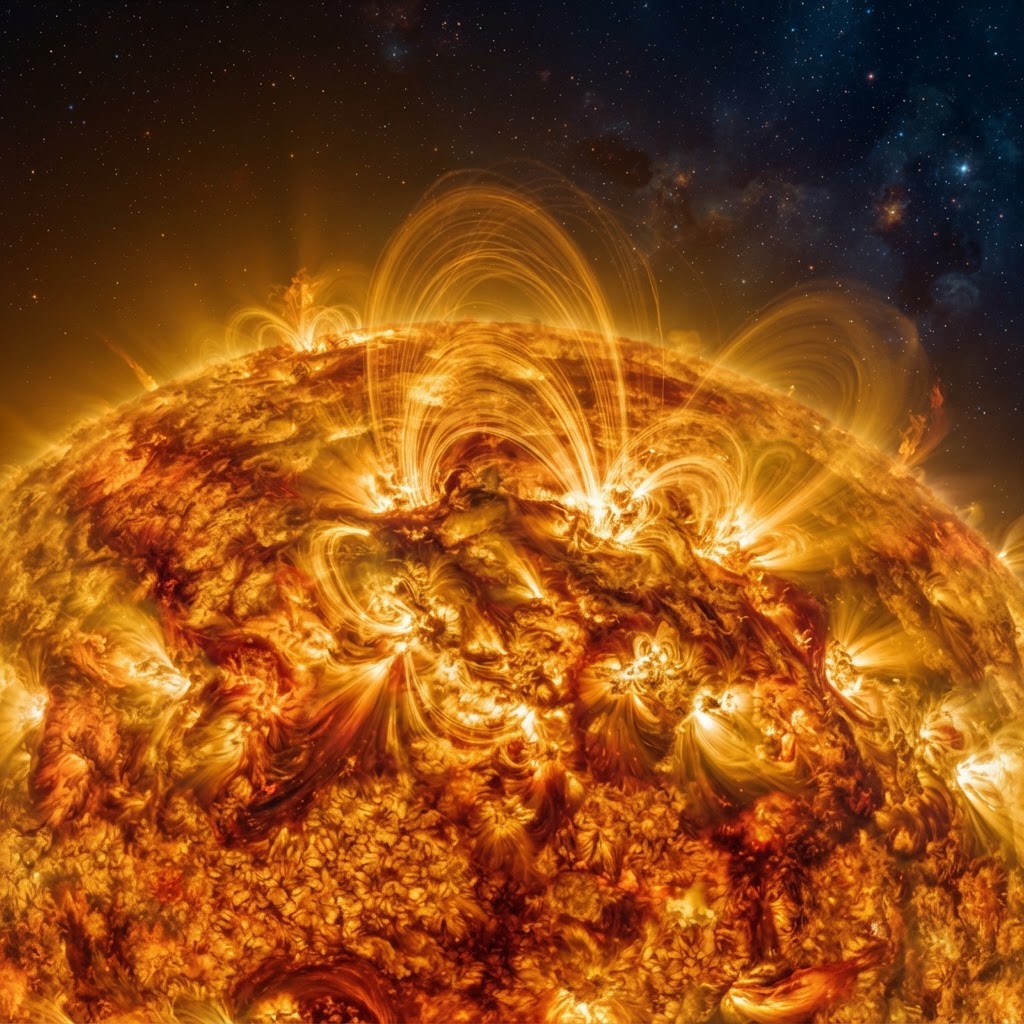
Protecting Our Modern Infrastructure The importance of this research extends far beyond the realm of theoretical physics; it is fundamentally about our safety here on Earth. As we become increasingly reliant on complex communication networks and electronic infrastructure, the stability of our environment becomes paramount. The sun acts as a primary driver of space weather, and understanding its outbursts is critical to our modern way of life. By mastering the ability to predict these solar events, we can better protect our satellite systems and power grids from interference. The discovery of how magnetic field interactions generate heat within the corona gives us the essential data needed to refine our space weather predictions. This is an optimistic leap forward in safeguarding the infrastructure that keeps our world connected, ensuring that as we reach further into the stars, we remain shielded from the volatile energy of our own sun.
A Bright Horizon for Astrophysics As we reflect on the data released in August 2026, it is clear that we are entering a new era of solar study. The Solar Orbiter mission, as a joint project between the ESA and NASA, was specifically built for this kind of deep-range scrutiny, and it has more than delivered on its promise. With every new high-resolution image, we gain a deeper appreciation for the complex mechanics governing the sun. We are moving away from guessing games and into a period of hard, visual evidence. The identification of magnetic braids as a key mechanism for energy transfer is just the beginning of what we will learn. The future of solar research looks incredibly bright, and with the continued collaboration of the UK’s brilliant scientific minds, we are well-positioned to unlock even more of the universe's most guarded secrets. We stand at the threshold of a greater understanding, ready to decode the sun’s secrets one swirling vortex at a time.
Originally reported by
All rights in the original reporting remain with the publishers below.
Originally reported by theguardian.com. Our feature is written independently from verified facts — please support the original reporting:
Read the original storyRelated Wins

 Sport
SportCHESS PRODIGIES BREAK BARRIERS IN NATIONAL LEAGUE DEBUT
The 'She Plays to Win' Lionesses have made history by competing in the top division of the Four Nations Chess League, marking the culmination of three consecutive promotions. Despite facing unique regulatory challenges regarding team composition, the squad continues to demonstrate exceptional skill and camaraderie at the highest level of British chess.
London & South · 5 hours ago

 Science
NEW PATHWAYS TO DIAGNOSIS: CAMBRIDGE STUDY SHEDS LIGHT ON AUTOIMMUNE HEALTH
A landmark study from the University of Cambridge is paving the way for more accurate medical care by highlighting critical gender disparities in the diagnosis of autoimmune conditions. By identifying how and why these misdiagnoses occur, researchers are providing the evidence needed to ensure patients receive faster, more effective support for their physical health.
London & South · 5 hours ago

 Environment
A NATURAL REVIVAL FOR BARNES GREEN
A major river restoration project has successfully transformed the Beverley Brook at Barnes Green into a thriving, natural habitat. This initiative has introduced a meandering river channel and a new island, significantly boosting local flood resilience and biodiversity.
London & South · 11 hours ago
The Sunshine Digest
One bright email each week — verified good news only, unsubscribe in a click.