Sky-High Lifesavers: Innovative Drone Project Takes Flight in the South East
A pioneering research initiative is currently underway in the South East of England to integrate drone technology into the emergency response system, aiming to deliver life-saving defibrillators to patients experiencing cardiac arrest faster than ever before.
The story in 20 seconds
20The project aims to bridge the gap between a 999 call and the arrival of professional medical help.
The initiative is divided into two primary phases: technical simulation and public perception research.
Phase one involves refining the coordination between 999 call-takers, Air Traffic Control, and drone operators.

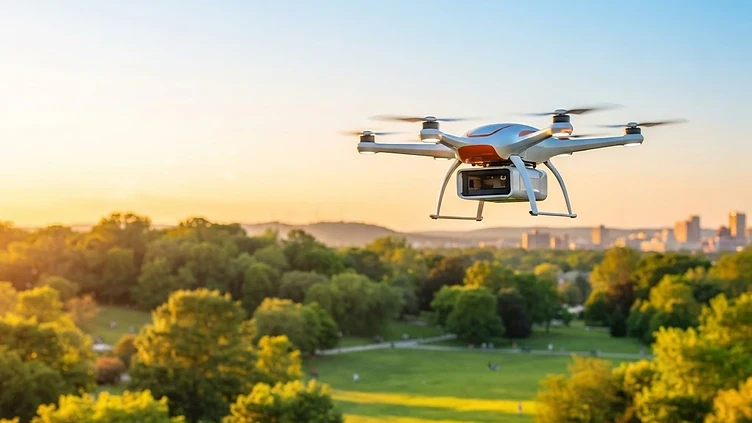
A New Horizon for Emergency Care In October 2025, a landmark project took flight in the South East of England, representing a bold leap forward in how we approach emergency medical responses. This pioneering initiative is harnessing the cutting-edge potential of drone technology to transform the way we manage out-of-hospital cardiac arrests. By integrating aerial delivery into the existing framework of emergency services, the project aims to deliver life-saving Automated External Defibrillators, or AEDs, to the scene of an incident with unprecedented speed. The collaboration is a powerhouse of expertise, uniting the University of Surrey, the Air Ambulance Charity Kent Surrey Sussex, and the South East Coast Ambulance Service. Together, they are working to ensure that when every second counts, help can arrive from the sky.
Bridging the Gap in Critical Seconds The core mission of this research is to bridge the vital time gap between a 999 emergency call and the arrival of professional medical help. When someone suffers a cardiac arrest outside of a hospital setting, the window for effective intervention is incredibly narrow. Currently, global survival rates for such incidents hover around a sobering ten percent. We know that timely defibrillation is the single most effective way to improve outcomes for patients with shockable cardiac rhythms. This project does not seek to replace our traditional ambulance services; instead, it is designed to operate as a sophisticated, complementary tool that works alongside them. By utilizing drones, the teams intend to overcome the common, frustrating hurdles of road congestion and remote terrain that can sometimes delay a land-based response. This is about precision, safety, and reliability, with researchers meticulously working to integrate drone deployment seamlessly into established NHS emergency protocols.
Two Phases of Progress The initiative is structured into two distinct but equally important phases to ensure the system is both technically sound and socially embraced. Phase one is the technical heart of the project, where specialists are refining the complex coordination required between 999 call-takers, Air Traffic Control, and the drone operators themselves. This level of synchronization is essential for safety, requiring a robust communication network that can respond to emergencies in real time. Once these technical hurdles are cleared, the focus shifts to phase two: a deep dive into public perception. Here, researchers are engaging with survivors of cardiac arrest, their families, and the wider public to understand their views on this new technology. It is a vital step, as the project seeks to identify any potential barriers to public acceptance and ensure that the community feels comfortable and secure with drones delivering medical equipment to their doorsteps.
Building on a Foundation of Research While this launch is a significant milestone for the South East, it sits within a broader context of innovation. The initiative builds upon a series of earlier feasibility studies and simulation exercises conducted across various parts of the UK. By learning from these previous efforts, the current team is able to focus on refining the deployment process to be as safe and reliable as possible. This steady, evidence-based approach is exactly why the project has the potential to make a genuine difference in patient survival rates. As the research continues to unfold, the collaborative nature of the partnership ensures that every flight is mapped against the highest standards of medical care and emergency management.
A Glimpse into the Future Looking ahead, the vision is one of hope and technological advancement. By transforming how quickly an AED can reach a patient, the project offers a tangible way to boost survival outcomes in the face of one of medicine's most time-sensitive challenges. The integration of drones into our emergency landscape marks a shift toward a future where our responses to emergencies are as dynamic as the situations themselves. Whether it is navigating a busy town center or reaching a remote location that is difficult for land ambulances to access, the sky provides a new path for saving lives. Through the combined efforts of academic research and emergency service expertise, the South East is leading the way in showing how innovation can be harnessed to protect our communities. As this research progresses, it stands as a testament to the fact that when we combine modern technology with our commitment to human life, we can create truly life-saving change.
Originally reported by
All rights in the original reporting remain with the publishers below.
Originally reported by theguardian.com. Our feature is written independently from verified facts — please support the original reporting:
Read the original storyRelated Wins

 Sport
SportAlexander Zverev clinches Laver Cup for Team Europe with victory over Learner Tien
Team Europe has reclaimed the Laver Cup title in a dominant performance at London’s O2 Arena, securing a decisive victory over Team World. The tournament concluded on September 27, 2026, with Alexander Zverev clinching the final points to seal the trophy for his side.
London & South · 4 hours ago

 Tech
TechKENT FIRM EMPOWERS SMALL BUSINESSES WITH NEW AI ACCELERATOR
Select Technology, a Kent-based IT provider, has launched a new 'AI Accelerator' programme designed to help small and medium-sized enterprises (SMEs) in the South East effectively integrate artificial intelligence and automation into their operations.
London & South · 4 hours ago

 Tech
TechBronze Legacy: East London Artist Captures British Icons in Clay
Renowned East London sculptor Frances Segelman continues her celebrated career of immortalising national figures through live, high-stakes portraiture. Her work serves as a bridge between traditional fine art and public engagement, frequently supporting charitable causes across the capital and beyond.
London & South · 10 hours ago
The Sunshine Digest
One bright email each week — verified good news only, unsubscribe in a click.