NEW HOPE FOR SIGHT: GENE THERAPY BREAKTHROUGH RESTORES VISION
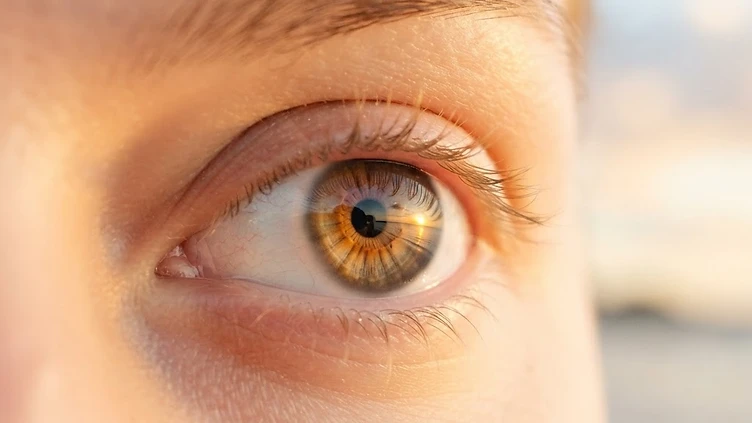
A pioneering medical advancement has demonstrated that gene therapy can successfully restore partial sight to individuals living with blindness. By utilizing light-sensitive proteins, this innovative treatment enables nerve cells to respond to visual stimuli, offering a transformative new path for patients with degenerative retinal conditions.
A New Dawn for Vision in the UK
For those living with the profound challenges of blindness, the world has long been defined by shadows and uncertainty. However, as of October 2026, a remarkable shift is occurring within the medical landscape of London and the South. Researchers and ophthalmologists have unveiled a groundbreaking medical advancement that is fundamentally changing how we approach the treatment of end-stage retinal disease. This pioneering optogenetic gene therapy is moving from the realm of theoretical research into a tangible, viable reality, offering genuine hope to individuals who previously faced the prospect of a lifetime without sight.
The Science of Light and Sight
At the heart of this innovation lies a sophisticated application of optogenetic therapy. By harnessing principles that have recently earned recognition, medical experts are now able to intervene where conventional treatments have failed. The process is both elegant and precise: by introducing light-sensitive proteins directly into the retinal cells of the patient, the therapy essentially recalibrates the eye to interact with its environment once more. Through a targeted injection, these proteins allow nerve cells to effectively turn on and off in response to light, acting as a bridge where natural biological pathways have broken down due to degenerative conditions.
This method represents a significant shift in clinical thinking. By focusing on the underlying capacity of the retina to respond to visual stimuli rather than attempting to fix a specific faulty gene, this approach is entirely mutation-agnostic. This is a critical distinction, as it means the therapy can be applied to patients regardless of the specific genetic variations that originally triggered their retinal degeneration. It provides a universal key to unlock visual perception for a wide range of conditions that were once considered irreversible.
Transforming Daily Life for Patients
The impact on the quality of life for those receiving this treatment cannot be overstated. Clinical research conducted across London and the South has confirmed that the therapy is safe for human application, with early results demonstrating that patients who had no remaining vision are now able to perceive light and motion. Imagine a world where the presence of a doorway or the movement of a person across a room can once again be sensed; for those who have spent years in total darkness, this is not just a medical milestone, but a life-changing restoration of independence.
Furthermore, the durability of these visual improvements is particularly encouraging. Unlike temporary fixes, the research shows that the restored visual function is maintained over time, allowing patients to adjust to a new way of navigating their surroundings. This longevity suggests that optogenetics is not merely a transient experiment, but a robust, long-term solution that provides a meaningful pathway for restoring sight to those living with advanced retinal degeneration.
A Future Built on Innovation
As we look toward the future, the implications for the UK health sector are immense. This breakthrough signifies that we are entering a new era where degenerative conditions are no longer met with clinical resignation, but with proactive, scientific action. The integration of this therapy into mainstream ophthalmology practice suggests a future where the definition of blindness itself is being rewritten. By empowering nerve cells to function again, we are seeing a restoration of visual dignity that provides a new, viable clinical pathway for thousands of individuals.
The optimism surrounding this development is palpable among the medical community in London and the South. It is a testament to the power of persistent, pioneering research and the profound potential of modern gene therapy. By utilizing the very building blocks of the retina to harness light, experts have opened a door that many believed was permanently closed. As this treatment continues to evolve, it stands as a beacon of progress, illustrating how dedicated science can translate into the most precious of gifts: the ability to see the world again. For families and patients alike, the discovery made in October 2026 marks the beginning of a brighter, clearer chapter.
Originally reported by
All rights in the original reporting remain with the publishers below.
Originally reported by Gene therapy can partly restore sight in blind people, researchers reveal. Our feature is written independently from verified facts — please support the original reporting:
Read the original storyRelated Wins

 Health
South London Golfers Tee Off for Prostate Cancer Awareness
A South London golf club recently hosted a record-breaking charity event where 78 golfers named Mark gathered to raise vital funds for prostate cancer research. The community-driven initiative has already generated £19,000, highlighting the power of local engagement in supporting national health causes.
London & South · 2 hours ago

 Science
CELESTIAL SPECTACLE: UK SKIES LIGHT UP IN RARE AURORA DISPLAY
The United Kingdom was treated to a breathtaking natural light show this past weekend as the aurora borealis made a rare and vivid appearance across the country, visible as far south as Devon, Hampshire, and Kent due to intense solar activity.
London & South · 2 hours ago

 Tech
TechILLUMINATING THE CAPITAL: CANARY WHARF’S WINTER LIGHTS FESTIVAL SET FOR 2027 RETURN
London’s iconic Canary Wharf district is preparing to transform into a glowing open-air gallery once again as its celebrated Winter Lights festival confirms its return for 2027. This free, immersive event will invite visitors to explore a curated trail of large-scale light installations, sculptures, and interactive projections designed by artists from across the globe.
London & South · 2 hours ago
The Sunshine Digest
One bright email each week — verified good news only, unsubscribe in a click.