LUNAR MISSION TO UNLOCK SECRETS OF THE EARLY UNIVERSE
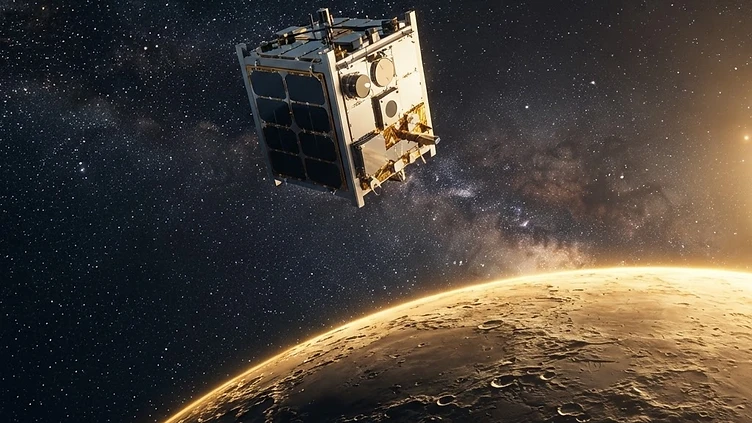
A pioneering UK-led space mission is preparing to deploy a compact satellite to the far side of the moon to observe the dawn of time. By positioning the craft away from Earth’s radio interference, researchers aim to capture elusive signals from the universe's infancy.
The story in 20 seconds
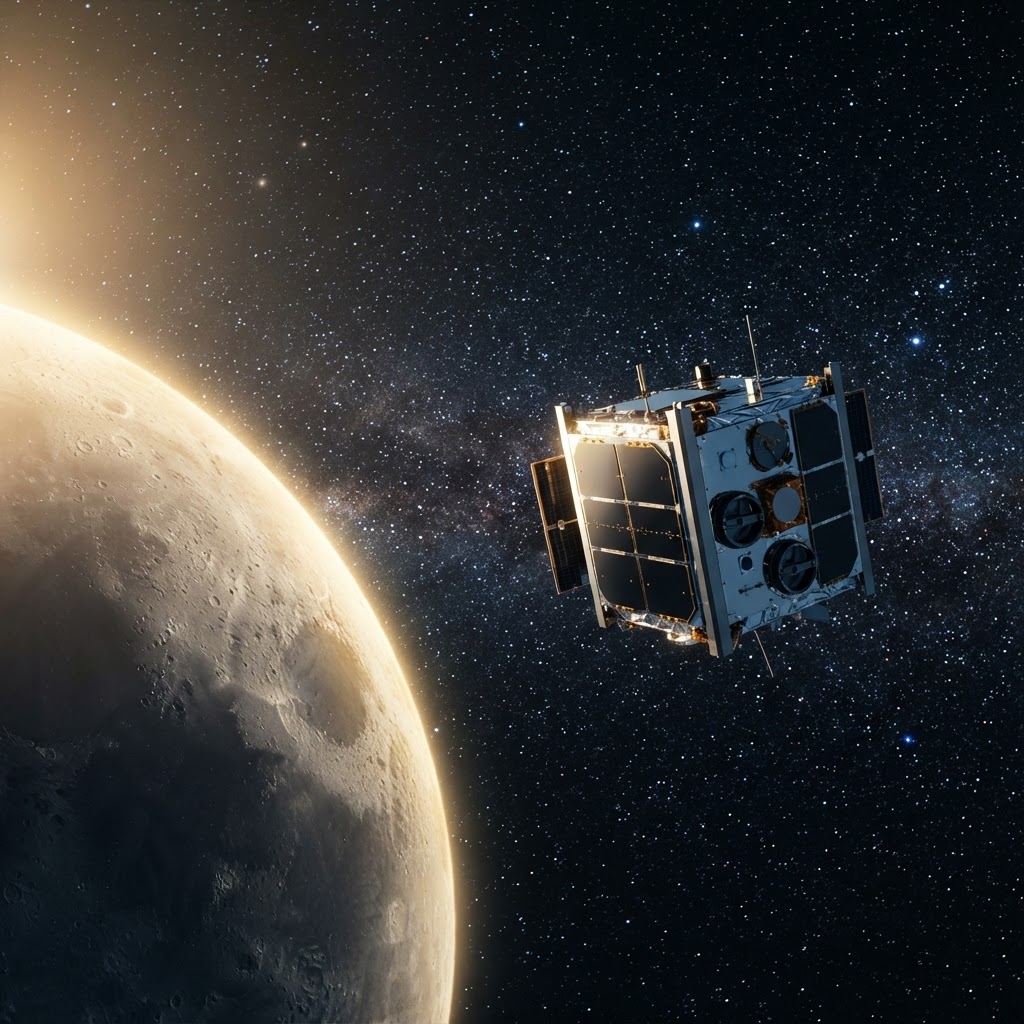
20The mission features a suitcase-sized satellite, known as CosmoCube, designed for lunar orbit.
The primary objective is to detect the 21cm line, a specific radio frequency signal emitted by neutral hydrogen.
This signal acts as a cosmic tracer, providing data on gas temperatures during the 'dark ages' of the universe.
A New Dawn for British Space Exploration
As we look toward the celestial horizon, a remarkable journey is taking shape right here in the United Kingdom. In a feat of modern engineering and scientific ambition, a UK-led team is preparing for a landmark mission that promises to peer further back into the history of our cosmos than ever before. Scheduled for August 2026, the project marks a significant milestone in Britain's growing contribution to deep-space observation. This initiative is not merely about reaching for the moon; it is about reaching for the very beginning of everything we know. With the full backing of the and a coalition of esteemed academic institutions, the mission represents a bold step forward in how we understand our place in the vast, silent tapestry of existence.
The Silent Beauty of the Lunar Far Side
Choosing a location for such a delicate observation is a task of immense strategic importance. The target destination is the far side of the moon, an environment chosen specifically for its profound solitude. While our own planet is a vibrant, busy hub of activity, it is also a source of constant radio interference that can drown out the faint, ancient signals we seek. By positioning our equipment on the lunar far side, the satellite will effectively hide behind the massive bulk of the moon itself. This natural shield creates a silent sanctuary, a zone of absolute radio quiet where the faintest whispers from the dawn of time might finally be heard. It is a brilliant example of using the moon not just as a landmark, but as a protective barrier to unlock the secrets of the universe.
Meet CosmoCube: Small Satellite Big Ambition
At the heart of this mission lies the CosmoCube, a marvel of miniaturized technology. Roughly the size of a suitcase, this compact satellite proves that the future of space exploration does not always require massive, cumbersome vessels. Instead, it embodies a new philosophy of efficiency, demonstrating how smaller-scale, highly targeted hardware can achieve extraordinary results. This shift in design is not just a triumph of engineering; it is a shift in mindset. By proving that a lightweight, efficient craft can navigate to lunar orbit and conduct high-stakes research, the UK team is setting a new benchmark for deep-space exploration. It is a testament to the ingenuity of British space experts who are proving that the most profound insights often come from the most precise instruments.
Tracking the Signals of the Cosmic Dark Ages
So, what exactly are we searching for in that silent lunar darkness? The mission focuses on detecting the elusive 21cm line, a specific radio frequency emitted by neutral hydrogen. This signal acts as a cosmic tracer, a flickering beacon from the long-vanished era known as the '' of the universe. For millions of years after the , the universe was a place of cold, sparse gas, long before the first stars ignited the darkness. By catching these faint 21cm signals, researchers hope to map the gas temperatures and gain a clearer of how the universe evolved. It is effectively a way of listening to the echoes of creation, bridging the mysterious gap between the initial explosion of the Big Bang and the eventual birth of the first galaxies.
Mapping the Reionization of the Universe
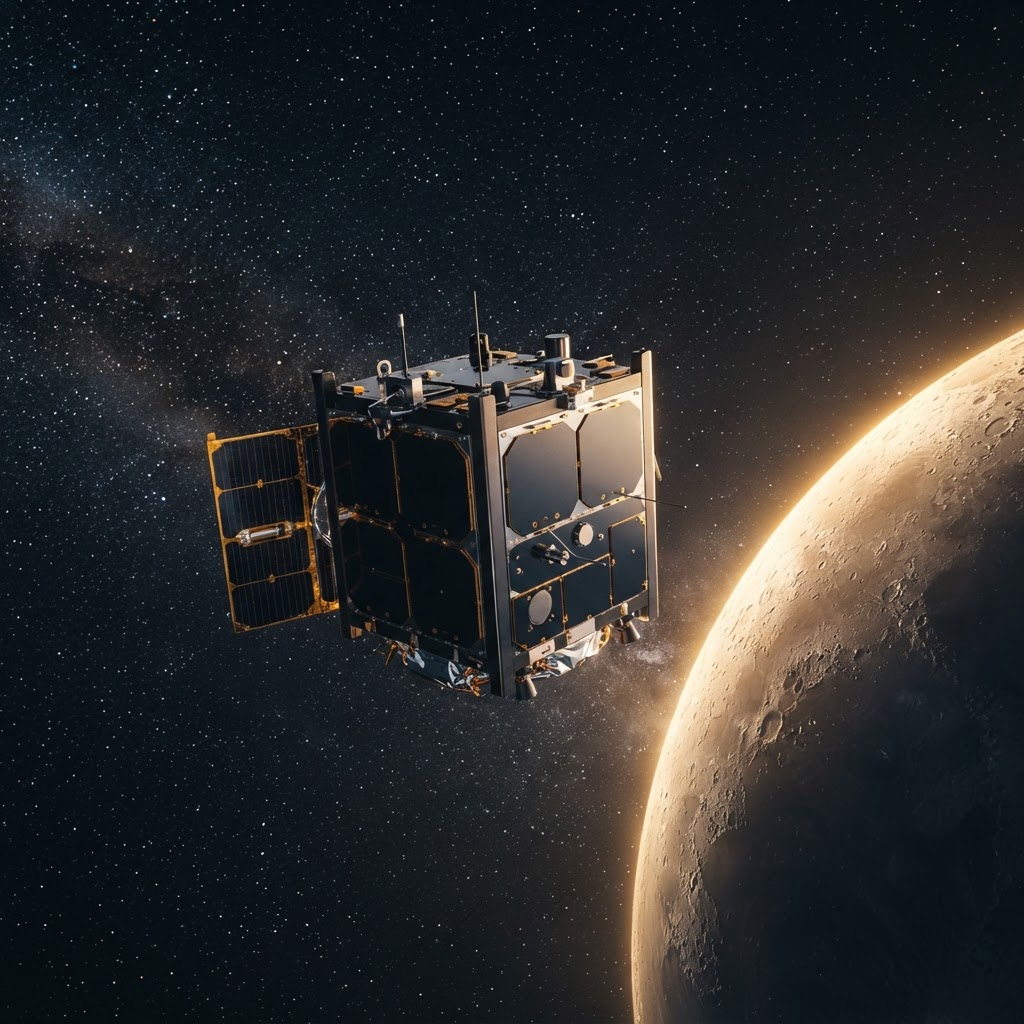
One of the most exciting aspects of this research is the potential to map the period of reionization. This was a transformative epoch where the universe transitioned from a state of neutral hydrogen to the bright, energetic space we observe today, driven by the emergence of the very first stars. To understand this transition is to understand the framework upon which our entire galaxy was built. By examining the data collected by the CosmoCube, scientists aim to provide a detailed history of this fundamental change. It is an ambitious goal that speaks to the heart of the UK-led scientific initiative: the drive to answer the most significant questions about how the universe shifted from a cold, quiet void into the glittering sea of galaxies that we see in our night sky today.
A Bold Future for British Science
This mission is a source of great optimism for the future of British science and technology. It highlights the UK's growing role as a leader in international space exploration and deep-space science. With the collaboration between the UK Space Agency and various academic institutions, the project reflects a unified effort to push the boundaries of the known. The successful deployment of the CosmoCube will not only provide us with historic data but will also solidify the UK’s reputation as a nation capable of tackling the most complex challenges in the solar system. We are watching the development of a mission that, by August 2026, could well rewrite the textbooks on the early life of our universe. It is a journey of discovery that invites all of us to look up, wonder, and take pride in the ingenuity that is bringing the distant past within our reach.
Originally reported by
All rights in the original reporting remain with the publishers below.
Originally reported by Scientists hope to shed light on young universe by using far side of the moon. Our feature is written independently from verified facts — please support the original reporting:
Read the original storyRelated Wins

 Sport
SportCHESS PRODIGIES BREAK BARRIERS IN NATIONAL LEAGUE DEBUT
The 'She Plays to Win' Lionesses have made history by competing in the top division of the Four Nations Chess League, marking the culmination of three consecutive promotions. Despite facing unique regulatory challenges regarding team composition, the squad continues to demonstrate exceptional skill and camaraderie at the highest level of British chess.
London & South · 4 hours ago

 Science
NEW PATHWAYS TO DIAGNOSIS: CAMBRIDGE STUDY SHEDS LIGHT ON AUTOIMMUNE HEALTH
A landmark study from the University of Cambridge is paving the way for more accurate medical care by highlighting critical gender disparities in the diagnosis of autoimmune conditions. By identifying how and why these misdiagnoses occur, researchers are providing the evidence needed to ensure patients receive faster, more effective support for their physical health.
London & South · 4 hours ago

 Environment
A NATURAL REVIVAL FOR BARNES GREEN
A major river restoration project has successfully transformed the Beverley Brook at Barnes Green into a thriving, natural habitat. This initiative has introduced a meandering river channel and a new island, significantly boosting local flood resilience and biodiversity.
London & South · 10 hours ago
The Sunshine Digest
One bright email each week — verified good news only, unsubscribe in a click.