London council buys 4 Canary Wharf offices to turn them into 180 flats for homeless people
A London local authority is repurposing four office buildings in the Canary Wharf district to provide 180 new flats for people experiencing homelessness. This initiative aims to address the capital's urgent need for stable, affordable housing by converting underutilised commercial real estate into residential accommodation.
The story in 20 seconds
20The project involves the acquisition of four office buildings located in the Canary Wharf area.
The council plans to convert these structures into 180 self-contained flats.
The primary objective is to provide secure housing for homeless individuals and families.
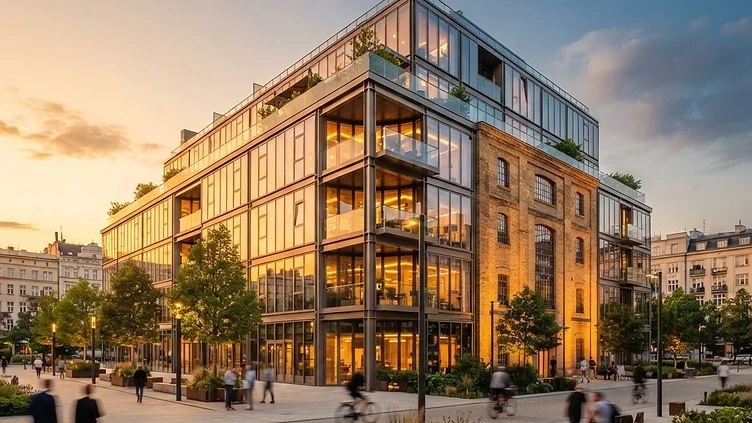
A New Vision for Canary Wharf In a remarkable shift for the iconic landscape of East London, the glass-fronted towers that define the Canary Wharf skyline are set to welcome a different kind of occupant. A local authority has embarked on a bold and imaginative project to acquire four underutilised office buildings, breathing new life into these commercial spaces by repurposing them into residential havens. Instead of traditional corporate activity, these sites will soon echo with the sounds of daily life, as 180 self-contained flats are meticulously crafted to provide permanent and secure homes for those who need them most. This development represents a significant departure from conventional property use, demonstrating how urban environments can be reimagined to better serve the community. By taking these four specific structures and transforming their interiors, the local council is turning the tide on a persistent issue that has long challenged the capital. The initiative focuses on providing stability for homeless individuals and families, moving away from the transient nature of short-term living arrangements and offering something far more foundational: a place to call home.
Tackling the Housing Crisis The scale of the housing crisis in the United Kingdom is often measured in statistics, but this project aims to address the human cost of the situation through concrete action. The current project in East London is a clear acknowledgement that the traditional approach to housing is being stretched to its limits. By repurposing commercial real estate that is no longer serving its original purpose, the council is not only finding a creative solution to space constraints but is also actively reducing the heavy reliance on temporary accommodation. For many, moving into these new flats will mark a transition from the instability of emergency arrangements to the dignity of a self-contained home. This shift is vital, as it allows for the cultivation of a personal environment, fostering a sense of ownership and peace that is essential for wellbeing. The decision to invest in these four buildings demonstrates a proactive stance against the scarcity of permanent accommodation, illustrating how local governance can intervene effectively when faced with pressing social challenges. The project highlights an innovative strategy: seeing potential in existing structures rather than starting from the ground up, thereby making efficient use of available resources within the busy heart of the city.
From Desks to Domesticity There is an inherent warmth in the idea of repurposing buildings that were once synonymous with the fast-paced world of finance into quiet, private sanctuaries. The transition from office cubicles to residential flats is an ambitious undertaking that reflects a changing priority within the region. These 180 homes are designed to be self-contained, providing the necessary privacy and security that every resident deserves. This architectural pivot is not just about changing the use of the rooms, but about changing the trajectory of lives. By securing these four sites, the council is ensuring that the benefits of the city are accessible to those who have previously struggled to find a foothold. The project acts as a bridge between the commercial identity of Canary Wharf and the urgent social necessities of the wider London area. It is a thoughtful response to a modern problem, focusing on sustainability and the reuse of buildings to solve a fundamental need for shelter. By concentrating on this specific area, the council is proving that even the most corporate environments can become inclusive spaces for those who need support. This initiative serves as a blueprint for how other local authorities might look at their own underutilised assets, turning them into long-term solutions for their own residents.
An Optimistic Path Ahead Looking toward the future, the success of this project could signify a turning point in how we think about housing in the UK. As the council moves forward with these plans, the hope is that these 180 new flats will provide a foundation of stability that allows residents to flourish. The reduction in reliance on temporary accommodation is more than just a logistical achievement; it is a way to restore the autonomy of those who have faced the hardship of homelessness. This project is a testament to the idea that with enough ingenuity, urban spaces can evolve to accommodate everyone. The atmosphere of Canary Wharf, once defined solely by its stature as a commercial hub, is now set to include a compassionate, residential element that brings the community together. As these buildings are converted, they will stand as symbols of progress, showing that the challenges of the housing crisis can be met with innovation and a clear commitment to social welfare. The project is a beacon of optimism, illustrating a future where urban development is aligned with the needs of the population, ensuring that secure, permanent housing is a reality for more people. The commitment shown by the local authority in this instance paves the way for a more resilient and inclusive environment in East London, proving that the most effective solutions are often found by rethinking the purpose of the structures already around us.
Originally reported by
All rights in the original reporting remain with the publishers below.
Originally reported by mylondon.news. Our feature is written independently from verified facts — please support the original reporting:
Read the original storyRelated Wins

 Environment
Alderley Edge in Bloom Reaches National Finals
The community volunteer group Alderley Edge in Bloom has been chosen as the only representative from the North West to compete in the 2026 RHS Britain in Bloom national finals, a testament to their long-term commitment to environmental improvement and local horticulture.
North of England · 1 hour ago

 Environment
Blooming Success: Alderley Edge Reaches National Finals
The Alderley Edge in Bloom volunteer group has been selected to represent the North West in the 2026 RHS Britain in Bloom national finals, showcasing the village's dedication to horticulture and community engagement.
North of England · 7 hours ago

 Environment
Alderley Edge Blooms on the National Stage
Dedicated volunteers in Alderley Edge have been working tirelessly to prepare the village for the prestigious RHS Britain in Bloom national finals. Their collaborative efforts, which include floral planting projects and weekly litter-picking, have earned the village a spot as the sole North West representative in the competition.
North of England · 7 hours ago
The Sunshine Digest
One bright email each week — verified good news only, unsubscribe in a click.