Fossilised red blood cells found in 115m-year-old dinosaur’s bone, say scientists
Researchers have identified the most compelling evidence to date of fossilised red blood cells within the 115-million-year-old remains of a theropod dinosaur. This landmark discovery, which includes the detection of iron-rich heme molecules, offers scientists a revolutionary new window into the physiology of extinct species.
The story in 20 seconds
20The dinosaur, Aratasaurus museunacionali, lived during the Early Cretaceous period, approximately 115 million years ago.
The specimen was a bipedal, meat-eating theropod that measured roughly 3.1 metres (10 feet) in length.
The dinosaur is estimated to have been a juvenile or young adult, aged about four years, at the time of its death.
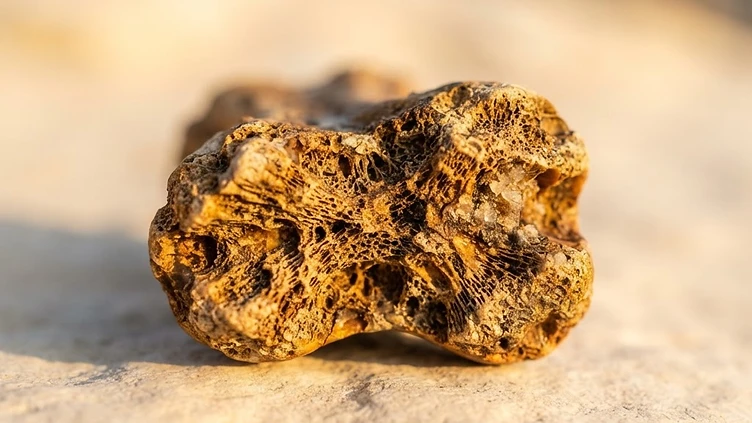
A Glimpse Into Ancient Life
Imagine stepping back one hundred and fifteen million years, a time when the world was ruled by the towering giants of the . While our minds often leap to images of colossal scale and prehistoric ferocity, a team of dedicated researchers has recently peered into the very veins of the past. Their work has unveiled something truly extraordinary: the preservation of fossilised red blood cells within the remains of a young theropod dinosaur, Aratasaurus museunacionali. This discovery, announced in early November 2026, feels like science fiction brought to life, offering a profound connection to a creature that walked the earth long before humanity existed. It is a moment of pure wonder for the scientific community, reminding us that even the deepest secrets of our planet are waiting to be uncovered in the most unlikely places. The international study, led by Curtin University in collaboration with experts from the University of Cariri and , marks a significant shift in our understanding of paleontology. By identifying iron-rich heme molecules within these ancient cells, the team has managed to peer deeper into the biological reality of an extinct species than we ever thought possible. It is a stunning triumph of modern analytical techniques, proving that with enough patience and curiosity, we can rewrite the history books.
Nature's Perfect Time Capsule
How exactly do such delicate biological structures survive the ravages of over a century of millions of years? The answer lies in a remarkable geological stroke of luck. The specimen was found preserved in an environment exceptionally low in oxygen and rich in microbes, a setting that functioned as a natural time capsule for the Aratasaurus. This, paired with the unique process involving hausmannite, served to stabilise the fragile remains, effectively locking them in place. The researchers were meticulous in their approach, taking great care to rule out any possibility of modern contamination. By carefully comparing the chemical signature of the bone to the surrounding sediment, they have provided the most compelling evidence to date that these molecules are indeed original to the specimen. This level of detail elevates the study from a curiosity to a milestone, challenging long-held assumptions about how soft tissue decays in the fossil record. It turns out that what we once considered mere stone may actually hold the keys to understanding the very lifeblood of the Cretaceous period. The findings reveal that these red blood cells are distinctively larger than those found in their modern-day descendants, such as birds and crocodiles. Such a difference hints at fascinating, hidden physiological traits that we are only just beginning to contemplate. For the scientists involved, observing these structures in situ is nothing short of revolutionary, proving that biology can persist in ways that defy our previous models of decay.
A New Window Into Physiology
The implications of this discovery reach far beyond the Aratasaurus itself, impacting how we study all life that has come before us. The dinosaur, which was approximately three metres long and likely only four years old at the time of its death, has become an unexpected ambassador for a new era of paleontological inquiry. By demonstrating that we can detect heme-derived molecules, the researchers have effectively opened a new door for future investigations. Many fossils that were previously labelled as nondescript or unimportant may now be revisited with these molecular techniques to see what secret stories they might be holding. It is a thrilling prospect for institutions across the globe, including those here in the UK and Australia, where the advanced analytical work continues to push the boundaries of what we can learn from ancient history. The ability to peer into the physiology of an extinct creature using its own cellular components is a leap forward that promises to change our fundamental grasp of evolution. We are moving away from studying dinosaurs merely as bones in a museum, and instead viewing them as living, breathing, and functioning animals. The collaborative effort highlights the importance of shared global expertise, bringing together diverse specialists to solve a puzzle that has remained hidden for an eternity.
Looking Towards The Future
As we reflect on this remarkable journey into the deep past, it is hard not to feel a sense of optimism about the future of science. The study published in the Proceedings of the of Sciences is a testament to human ingenuity and our enduring desire to understand the natural world. It proves that the history of Earth is not written in stone alone, but in the subtle chemical traces left behind by the creatures that thrived long ago. We are no longer limited by the limitations of our previous assumptions regarding soft tissue preservation. Instead, we have a new framework that will inspire researchers to look closer, dig deeper, and ask better questions. This discovery is a beacon of hope for young scientists starting their careers, showing them that there are still incredible frontiers to be explored and mysteries to be solved. As we move forward, the techniques refined by this international team will surely be applied to other specimens, potentially revealing more about how these fascinating animals lived and interacted with their environment. The Aratasaurus may have lived over a hundred million years ago, but through this work, it has provided us with a bridge to the past, reminding us of the immense complexity and resilience of life on this planet. It is a truly bright moment for science, proving that even the oldest relics can provide the most modern and exciting insights into our shared origins.
Originally reported by
All rights in the original reporting remain with the publishers below.
Originally reported by theguardian.com. Our feature is written independently from verified facts — please support the original reporting:
Read the original storyRelated Wins

 Health
Firework blinded me at 14 – London surgeon restored my sight and hope
A young man who suffered life-changing injuries after a firework accident has regained his vision and confidence thanks to the expertise of a London-based specialist. After being told by previous doctors that his condition was hopeless, the patient underwent successful reconstructive surgery that has allowed him to return to his life as an entrepreneur.
London & South · 8 hours ago

 Environment
New Digital Tool Empowers Gardeners to Combat Climate Change
A pioneering new digital assessment tool is helping UK gardeners select plants that are specifically adapted to thrive in their local area’s projected future climate. By predicting how different species will respond to changing regional weather patterns, the technology enables enthusiasts to build resilient, drought-tolerant green spaces that support biodiversity.
London & South · 8 hours ago

 Science
A LONDON SURGEON RESTORES SIGHT AND HOPE TO FIREWORK VICTIM
A young man who suffered total blindness following a traumatic firework accident has regained his vision and confidence thanks to the expertise of a London-based eye surgeon. After years of living in darkness, the patient has successfully transitioned into a new chapter of his life as an entrepreneur.
London & South · 8 hours ago
The Sunshine Digest
One bright email each week — verified good news only, unsubscribe in a click.