Cracking the Cetacean Code: Scientists Use AI to Map the Language of Whales
Marine researchers have achieved a major milestone in understanding the complex vocalizations of whales by using artificial intelligence to identify a "phonetic alphabet" in their communication patterns, suggesting that sperm whales possess a sophisticated combinatorial language system.
The story in 20 seconds
20The research is part of a broad scientific effort, including the Cetacean Translation Initiative (Project CETI), to translate non-human communication.
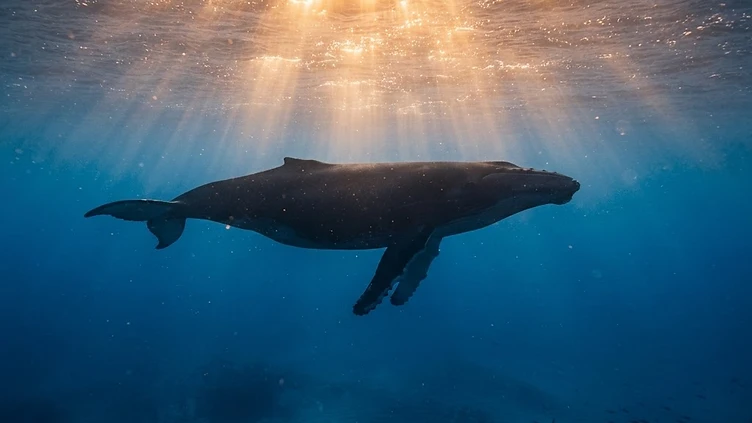
Sperm whales are the primary focus of this study because they possess the largest brains of any species on Earth.
Scientists have identified a "sperm whale phonetic alphabet" consisting of specific click patterns called codas.
Listening to the deep blue voices
For decades, the vast, mysterious depths of our oceans have held secrets that seemed locked away forever. Ever since the first high-quality recording of a whale song emerged in 1949, humanity has been captivated by the haunting, rhythmic melodies echoing beneath the waves. Now, a brilliant fusion of modern technology and classic marine biology is beginning to unlock these acoustic puzzles. A multidisciplinary collective of is currently transforming our relationship with the natural world, using artificial intelligence to translate the complex communication systems of whales. This remarkable journey is not just a scientific pursuit; it is a profound attempt to understand the intelligence that resides within our global waters.
Unlocking the phonetic alphabet
At the heart of this initiative is an extraordinary discovery. from prestigious institutions including Harvard, MIT, and the of New York, working under the umbrella of , have identified a phonetic alphabet within the communication patterns of sperm whales. These majestic creatures, known for possessing the largest brains of any species on Earth, have long been a subject of fascination. By deploying specialized underwater microphones, or hydrophones, attached to advanced robotic devices and buoys, researchers have captured thousands of sequences of vocal clicks. Through the power of learning, these experts have processed over 8,700 sequences, meticulously categorising the specific click patterns known as codas.
What the data reveals is nothing short of breathtaking. Whales appear to modify their codas with precise variations in duration and tempo. By adjusting these small units of sound, they create a vast repertoire of unique vocalizations, effectively building a combinatorial language. This suggests that the clicks are not merely random noises, but rather structured messages that can be combined to form entirely new meanings. This discovery marks a pivotal shift in how we perceive animal cognition. For years, many assumed that the ability to utilize such complex vocal structures was exclusive to humans and a handful of other land animals. Now, the sperm whale stands as a testament to a level of social complexity previously underestimated by science.
The science of social groups
These findings suggest that sperm whales lead lives of incredible social depth. They thrive in matrilineal groups, and it appears these family units share specific dialects that define their cultural identity. This level of sophistication is a natural point of interest for researchers who are eager to decode the meaning behind these interactions. Project CETI and its global partners are looking beyond simple observations, aiming to bridge the gap between human and non-human communication. With the rapid advancement of artificial intelligence, the ability to parse such massive acoustic datasets has finally caught up with the ambition of the researchers.
This work is of particular interest to conservationists. By truly grasping the nature of these vocalizations, scientists hope to learn more about how sperm whale societies react to environmental changes. If we can interpret their reactions to a shifting planet, we might better support the preservation of these intelligent creatures. Understanding the nuance of their clicks may one day prove essential for identifying when these populations are under stress, providing a vital tool in the broader mission of global marine protection.
A future of interspecies connection
As we look ahead, the implications of this research are profoundly optimistic. We are moving closer to a future where interspecies communication is no longer a concept limited to fiction, but a tangible scientific reality. By listening to the ocean through the lens of AI, we are acknowledging that the intelligence present in the deep blue is as worthy of respect and study as our own. The dedication shown by linguists, roboticists, and biologists working in research settings across the globe ensures that our knowledge will only continue to expand.
It is a heartening thought that the rhythmic clicks of a sperm whale, which have echoed through the sea for generations, are finally being understood by those on land. As the research continues, each new piece of data processed by machine learning brings us one step closer to decoding the nuances of whale society. This initiative is a beautiful reminder that our planet is home to diverse forms of intellect, each contributing to the rich tapestry of life. Whether or not we ever fully master their language, the effort itself fosters a deeper appreciation for the marine world. For those of us here in the UK and beyond, this represents a major milestone in human history, highlighting how technology can unite us with the wider natural world in a way we never before thought possible. The conversation between species has begun, and the results promise to be as vast and deep as the oceans themselves.
Originally reported by
All rights in the original reporting remain with the publishers below.
Originally reported by Could humans ever communicate with whales? - video. Our feature is written independently from verified facts — please support the original reporting:
Read the original storyRelated Wins

 Sport
SportCHESS PRODIGIES BREAK BARRIERS IN NATIONAL LEAGUE DEBUT
The 'She Plays to Win' Lionesses have made history by competing in the top division of the Four Nations Chess League, marking the culmination of three consecutive promotions. Despite facing unique regulatory challenges regarding team composition, the squad continues to demonstrate exceptional skill and camaraderie at the highest level of British chess.
London & South · 2 hours ago

 Science
NEW PATHWAYS TO DIAGNOSIS: CAMBRIDGE STUDY SHEDS LIGHT ON AUTOIMMUNE HEALTH
A landmark study from the University of Cambridge is paving the way for more accurate medical care by highlighting critical gender disparities in the diagnosis of autoimmune conditions. By identifying how and why these misdiagnoses occur, researchers are providing the evidence needed to ensure patients receive faster, more effective support for their physical health.
London & South · 2 hours ago

 Environment
A NATURAL REVIVAL FOR BARNES GREEN
A major river restoration project has successfully transformed the Beverley Brook at Barnes Green into a thriving, natural habitat. This initiative has introduced a meandering river channel and a new island, significantly boosting local flood resilience and biodiversity.
London & South · 8 hours ago
The Sunshine Digest
One bright email each week — verified good news only, unsubscribe in a click.