Cosmic Mystery Solved as Astronomers Identify Gargantuan 'Black Hole Stars'
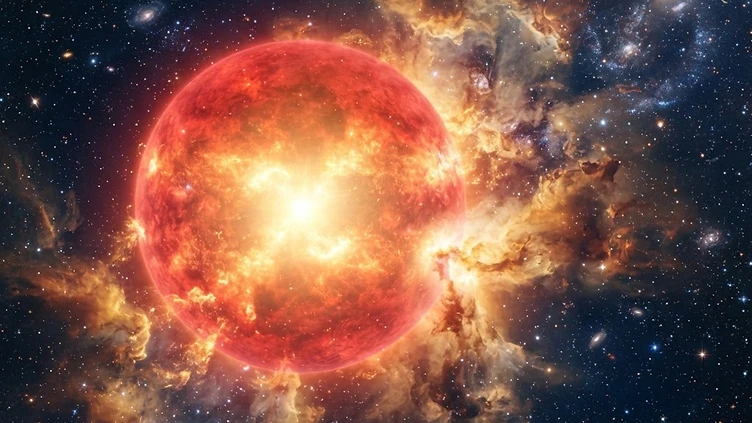
Scientists using the James Webb Space Telescope have identified a new class of celestial body that combines the characteristics of stars and black holes. These massive, glowing red objects provide a vital link in understanding how the universe's earliest supermassive black holes formed and expanded.
The story in 20 seconds
20The new class of cosmic object is formally referred to as a 'black hole star'.
The specific object identified in the study is designated MoM-BH*-1.
Observations were conducted using the James Webb Space Telescope (JWST).
A New Dawn for Cosmic Discovery
In a monumental breakthrough that has sent ripples of excitement through the global scientific community, astronomers have peeled back the layers of our ancient past to reveal a mysterious new celestial resident. On August 12, 2026, researchers shared findings that solve a long-standing puzzle about the structure of our early universe. By peering deep into the cosmic abyss using the unparalleled capabilities of the , a team of international experts has identified a fascinating new category of celestial body, now known as the . These gargantuan objects, once hidden by the immense distances of space and time, represent a missing link in our understanding of how the universe evolved in its infancy.
Unveiling MoM-BH*-1
At the heart of this discovery lies a specific, awe-inspiring object designated as MoM-BH*-1. Dating back to approximately 660 million years after the , this celestial titan exists at a staggering distance of billions of light-years from . To the untrained eye, these objects were once simply categorized as , their brilliant red glow camouflaging their true nature. However, the sophisticated infrared technology housed within the James Webb Space Telescope allowed astronomers to see past this shimmering veil. By utilising these infrared capabilities, researchers have been able to confirm that what appeared as small, distant flickers are actually objects of immense scale and power, with dimensions comparable to the size of our entire solar system.
The Anatomy of a Giant
So, what exactly is a black hole star? This extraordinary phenomenon describes a configuration where a supermassive black hole sits at the very centre of an enormous hydrogen gas cloud. The energy generated by this unique structure is nothing short of breathtaking. These objects produce roughly 100 billion times more energy than an average star, a testament to the sheer intensity of the physics at play within them. This finding, which was formally documented in the prestigious scientific journal Nature, provides a critical explanation for a problem that has puzzled scientists for decades. Previously, experts struggled to comprehend how black holes could achieve such extreme, supermassive status within the first billion years of the universe. The existence of these hybrid objects offers a perfect solution, demonstrating that these massive energy sources acted as a catalyst for rapid growth and expansion.
British Contributions to the Stars
The story of this discovery is deeply tied to British ingenuity and collaborative international effort. While the research was led by , an astronomer based at the University of Hawaii, the success of the mission relied heavily on the technology that made it possible. The James Webb Space Telescope is a masterpiece of modern engineering, and its MIRI instrument played a vital role in capturing the data necessary to identify these red-shifted objects. British scientists and made significant contributions to the development of this instrument, ensuring that the United Kingdom remains at the forefront of space exploration and scientific innovation. It is a source of great national pride that technology developed on our shores has been instrumental in unveiling secrets that have been locked away since the dawn of time.
Looking Towards a Brighter Future
The identification of black hole stars is more than just a footnote in a textbook; it is a transformative moment that redefines our narrative of cosmic history. By understanding how these supermassive entities emerged and grew so quickly following the Big Bang, we gain a much clearer picture of the architecture of the early universe. This research illuminates the path forward for future studies, as astronomers continue to push the boundaries of what is observable. The collaborative nature of this work, bridging the gap between international research teams and high-precision instrumentation, serves as a shining example of what humanity can achieve when we set our sights on the mysteries of the sky. As we look ahead, the scientific community is emboldened by the knowledge that the early universe is no longer quite so mysterious. With every new observation from the James Webb Space Telescope, we are moving one step closer to solving the final pieces of the cosmic puzzle. For now, the little red dots have shared their secrets, revealing themselves to be gargantuan, energetic titans that hold the key to our origins. It is a time of immense optimism for science, as we continue to gaze upward, ready to uncover whatever wonders the universe may hold next.
Originally reported by
All rights in the original reporting remain with the publishers below.
Originally reported by Astronomers discover a new kind of cosmic object – a black hole ‘star’. Our feature is written independently from verified facts — please support the original reporting:
Read the original storyRelated Wins

 Sport
SportCHESS PRODIGIES BREAK BARRIERS IN NATIONAL LEAGUE DEBUT
The 'She Plays to Win' Lionesses have made history by competing in the top division of the Four Nations Chess League, marking the culmination of three consecutive promotions. Despite facing unique regulatory challenges regarding team composition, the squad continues to demonstrate exceptional skill and camaraderie at the highest level of British chess.
London & South · 2 hours ago

 Science
NEW PATHWAYS TO DIAGNOSIS: CAMBRIDGE STUDY SHEDS LIGHT ON AUTOIMMUNE HEALTH
A landmark study from the University of Cambridge is paving the way for more accurate medical care by highlighting critical gender disparities in the diagnosis of autoimmune conditions. By identifying how and why these misdiagnoses occur, researchers are providing the evidence needed to ensure patients receive faster, more effective support for their physical health.
London & South · 2 hours ago

 Environment
A NATURAL REVIVAL FOR BARNES GREEN
A major river restoration project has successfully transformed the Beverley Brook at Barnes Green into a thriving, natural habitat. This initiative has introduced a meandering river channel and a new island, significantly boosting local flood resilience and biodiversity.
London & South · 8 hours ago
The Sunshine Digest
One bright email each week — verified good news only, unsubscribe in a click.