Cambridge Scientists Launch £20 Million Project to Replace Animal Testing with Lab-Grown Human Organs
A pioneering initiative in Cambridge is set to transform medical research by developing standardized miniature human organs from patient cells to test new medicines. This £20 million project aims to provide more accurate results for human health while significantly reducing the scientific community's reliance on animal models.
The story in 20 seconds
20The project is supported by a £20 million investment to advance bioengineering in the UK.
Research is centered in Cambridge, a leading global hub for life sciences and biotechnology.
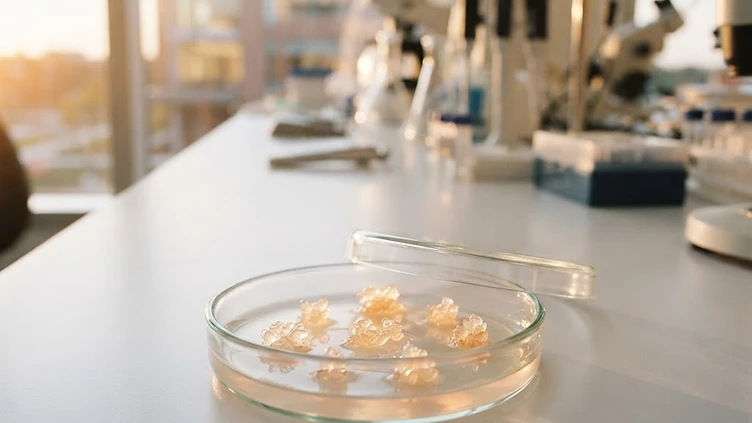
Scientists are growing 'organoids,' which are microscopic, 3D structures that mimic the biological functions of human organs.
A New Horizon for British Medical Innovation
A quiet revolution is taking root within the hallowed laboratories of , promising to redefine the future of medical discovery. By August 2026, a landmark initiative backed by a significant £20 million investment will launch, aiming to steer the scientific community toward a more ethical and effective way of developing lifesaving treatments. This ambitious project, centered in one of the world's most prominent hubs for life sciences, seeks to replace traditional animal testing with a sophisticated, human-centric approach that could save countless lives and drastically improve the reliability of drug research.
At the heart of this transformation is the development of miniature human organs, known as organoids. These microscopic, three-dimensional structures are ingeniously crafted to mimic the biological functions of our own organs, such as the heart, liver, or lungs. By utilizing live cells donated by NHS patients, can create laboratory models that behave with startling accuracy when exposed to new chemical compounds. This shift toward advanced bioengineering places the United Kingdom at the global forefront of regenerative medicine and ethical scientific innovation, marking a monumental departure from historical practices.
Solving the Failure of Drug Trials
For decades, the pharmaceutical industry has grappled with a frustrating hurdle: many drugs that show promise in animal trials ultimately fail to perform safely or effectively when they reach human patients. This discrepancy often results in wasted time, enormous costs, and the heartbreaking reality of treatments that do not provide the relief researchers once hoped for. By moving away from animal models, which frequently fail to replicate the nuances of human biology, this Cambridge-led initiative aims to bridge that critical gap. The primary objective is to test new medicines on human tissue models, ensuring that the results gathered in the lab are more predictive of how the body will react in a real-world setting.
Standardization is the cornerstone of this effort. By ensuring these miniature organ models are uniform across different laboratories, the researchers can achieve reproducible results that meet rigorous regulatory standards. This is a vital step toward securing broader approval for animal-free testing methods. As these new approaches gain traction, the goal is to significantly reduce the scientific community’s reliance on animal subjects, championing a future where medical progress does not come at the cost of animal welfare.
The Promise of Personalized Medicine
Beyond the ethical benefits, this technology offers an exciting leap forward in the field of . Because these organoids are created using cells from real patients, researchers gain the unique ability to observe how specific biological profiles interact with various pharmaceuticals. This level of precision allows for a tailored approach to drug development, potentially identifying the most effective treatments for individuals much earlier in the investigative process. It is a rare convergence of academic curiosity, NHS patient partnership, and pharmaceutical expertise that makes this endeavor so uniquely powerful.
By identifying failing compounds earlier in the development cycle, this project promises to lower the overall costs of bringing a new drug to market. Efficient, accurate testing means that resources can be directed toward the most promising medications, accelerating the timeline for getting new cures into the hands of those who need them most. The collaboration between universities, the healthcare sector, and pharmaceutical companies ensures that the knowledge gained is practical, scalable, and directly applicable to the challenges faced by today’s clinicians.
Leading the World in Ethical Science
As August 2026 approaches, the anticipation within the Cambridge scientific community continues to grow. This project is not merely an experiment; it is a strategic investment in the intellectual and technological infrastructure of the United Kingdom. By championing , or NAMs, the initiative positions the nation as a leader in high-tech, compassionate medicine. It represents a mature recognition that the best way to understand human health is to study it on its own terms, using the very cells that keep us alive.
Looking ahead, the success of this endeavor could fundamentally alter the landscape of international drug discovery. If the UK can prove that standardized, lab-grown organs provide a safer and more precise alternative to traditional models, it will undoubtedly set a new standard for the rest of the world. This is a story of ingenuity, where the marriage of advanced biology and patient-centered research creates a brighter, more ethical path forward. For the millions of people who stand to benefit from safer and more effective drugs, this initiative is a beacon of progress and a testament to the power of human-driven innovation.
Originally reported by
All rights in the original reporting remain with the publishers below.
Originally reported by ‘A mouse can’t tell us what works’: UK scientists to grow miniature human organs for drug testing. Our feature is written independently from verified facts — please support the original reporting:
Read the original storyRelated Wins

 Sport
SportCHESS PRODIGIES BREAK BARRIERS IN NATIONAL LEAGUE DEBUT
The 'She Plays to Win' Lionesses have made history by competing in the top division of the Four Nations Chess League, marking the culmination of three consecutive promotions. Despite facing unique regulatory challenges regarding team composition, the squad continues to demonstrate exceptional skill and camaraderie at the highest level of British chess.
London & South · 2 hours ago

 Science
NEW PATHWAYS TO DIAGNOSIS: CAMBRIDGE STUDY SHEDS LIGHT ON AUTOIMMUNE HEALTH
A landmark study from the University of Cambridge is paving the way for more accurate medical care by highlighting critical gender disparities in the diagnosis of autoimmune conditions. By identifying how and why these misdiagnoses occur, researchers are providing the evidence needed to ensure patients receive faster, more effective support for their physical health.
London & South · 2 hours ago

 Health
Widnes youngster cutting hair after 10 years for good cause
A young Widnes resident has donated his hair after growing it for a decade to support children facing hair loss due to medical treatment.
North of England · 7 hours ago
The Sunshine Digest
One bright email each week — verified good news only, unsubscribe in a click.