British Scientists Create First Homegrown Chocolate Bar in Nearly a Century
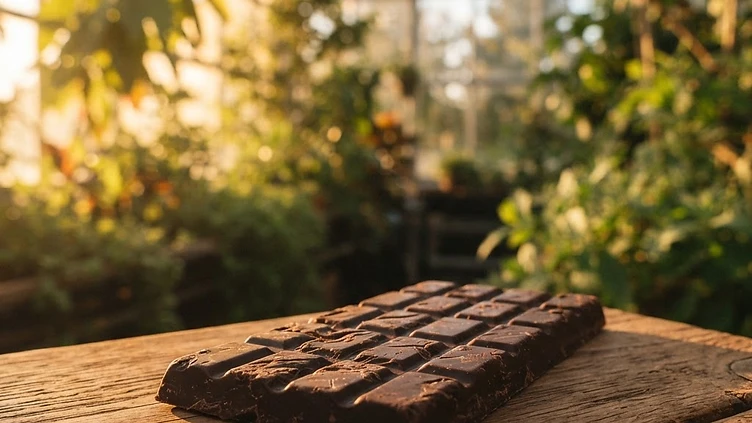
Researchers at the University of Reading have successfully produced a chocolate bar using cocoa beans grown entirely within the United Kingdom. This scientific achievement marks the first time since 1932 that a 100% British-sourced chocolate bar has been created, showcasing the potential for climate-resilient agriculture.
The story in 20 seconds
20The chocolate bar was crafted by a Master’s student at the University of Reading.
It represents the first chocolate bar made with 100% UK-grown ingredients since 1932.
The cocoa beans were grown at the International Cocoa Quarantine Centre (ICQC) in Earley, Berkshire.
A Sweet Scientific Milestone In Berkshire
For nearly a century, the notion of a British-grown chocolate bar remained a distant curiosity, tucked away in the archives of history. That changed on 12, 2026, when researchers at the of Reading unveiled a remarkable achievement: the creation of a chocolate bar crafted entirely from cocoa beans grown on home soil. This milestone represents the first time since 1932 that such a feat has been accomplished, marking a significant leap forward for UK agricultural science. While many of us enjoy chocolate as an everyday indulgence, this specific bar carries the weight of serious scientific endeavour, reflecting a project that bridges the gap between traditional farming and modern climate research. The project, spearheaded by a Master’s student at , was brought to fruition within the specialised environment of the in Earley, Berkshire. By successfully turning homegrown beans into a tangible, edible product, the team has not only demonstrated a fascinating botanical success but has also reminded the public of the critical work being conducted within our own borders to secure the future of our favourite treat.
Nature Adapted To Our Shores
The story of this chocolate bar begins inside custom-built greenhouses in Berkshire, where the International Cocoa Quarantine Centre recreates the delicate, warm environment required by tropical cocoa plants. Achieving this in the heart of the UK requires precision, as the climate here is naturally far cooler than the tropical regions where cocoa typically thrives. However, this inherent difference in climate actually provides an unexpected advantage. temperate weather acts as a natural biological safety barrier, helping to significantly reduce the risk of spreading tropical pests and diseases that often plague cocoa crops in other parts of the world. This safety feature makes the facility at the University of Reading a vital player in global . The centre currently manages about 98 per cent of the world’s international trade in live cocoa plant material, acting as a secure gateway for global exchange. Since the early 1980s, the University of Reading has cultivated an international reputation for excellence in cocoa research, and this recent project is a testament to that long-standing commitment. The site even maintains a vast genetic resources database that scientists around the globe utilise to safely exchange planting materials, ensuring that the world’s cocoa diversity remains protected.
Securing The Future Of Cocoa
Beyond the novelty of a homegrown treat, the project carries a profound sense of urgency regarding the global chocolate supply chain. As climate change continues to impact weather patterns in traditional cocoa-producing countries, the vulnerability of the global supply is becoming increasingly apparent. By mastering the cultivation of cocoa in a controlled, research-focused environment, the University of Reading is contributing to the development of cocoa varieties that are more resilient to environmental stress and disease. The work, managed by the School of Agriculture, Policy and Development, is deeply tied to the major expansion of the facility that took place in 2015. This expansion was specifically designed to improve the safeguarding of global cocoa varieties, ensuring that the genetic blueprint of the plant is preserved for future generations. This is not merely about producing confectionery; it is about agricultural resilience. The creation of the bar serves as a powerful demonstration that scientific innovation can help us adapt to a changing world, providing hope that we can better manage the challenges facing one of the world’s most beloved crops. The project highlights UK leadership in a sector that is essential for global food security, showing that even a small, academic facility can have a massive, positive impact on international sustainability.
A Rare And Sweet Legacy
There is a certain historical charm to this achievement, made all the more special by how rare it truly is. Records suggest that in all of history, only one other person has ever sampled a chocolate bar made with British-grown cocoa: the late . With this new project, the university has reignited a dormant tradition, proving that with enough dedication and scientific expertise, the impossible can become a reality. It is a moment of genuine pride for the researchers in Earley, who have managed to synthesise years of complex genetic study into something as simple and delightful as a chocolate bar. As we look towards an uncertain future for global crops, the success of this project offers a refreshing note of optimism. It shows that by investing in our domestic research facilities and prioritising climate-resilient agriculture, we can protect the ingredients we value most. The University of Reading has proven that even in a region not known for its tropical conditions, we have the ingenuity to foster growth, safeguard plant health, and contribute to the global understanding of agriculture. As the sun sets on the facility in Berkshire, the team continues their work, supported by their global network and their dedication to the future of cocoa, leaving us with a sweet reminder that innovation is the key to enduring change.
Originally reported by
All rights in the original reporting remain with the publishers below.
Originally reported by theguardian.com. Our feature is written independently from verified facts — please support the original reporting:
Read the original storyRelated Wins

 Sport
SportCHESS PRODIGIES BREAK BARRIERS IN NATIONAL LEAGUE DEBUT
The 'She Plays to Win' Lionesses have made history by competing in the top division of the Four Nations Chess League, marking the culmination of three consecutive promotions. Despite facing unique regulatory challenges regarding team composition, the squad continues to demonstrate exceptional skill and camaraderie at the highest level of British chess.
London & South · 3 hours ago

 Science
NEW PATHWAYS TO DIAGNOSIS: CAMBRIDGE STUDY SHEDS LIGHT ON AUTOIMMUNE HEALTH
A landmark study from the University of Cambridge is paving the way for more accurate medical care by highlighting critical gender disparities in the diagnosis of autoimmune conditions. By identifying how and why these misdiagnoses occur, researchers are providing the evidence needed to ensure patients receive faster, more effective support for their physical health.
London & South · 4 hours ago

 Environment
A NATURAL REVIVAL FOR BARNES GREEN
A major river restoration project has successfully transformed the Beverley Brook at Barnes Green into a thriving, natural habitat. This initiative has introduced a meandering river channel and a new island, significantly boosting local flood resilience and biodiversity.
London & South · 10 hours ago
The Sunshine Digest
One bright email each week — verified good news only, unsubscribe in a click.