Bats originated in Europe, rewriting mammals’ family tree, study reveals
A landmark international study led by researchers at the University of St Andrews has successfully mapped the evolutionary history of bats, pinpointing their origins to Europe approximately 65 million years ago. This comprehensive analysis, which combined the largest-ever collection of bat genomes with fossil records, provides vital new insights into how these unique creatures developed flight and echolocation.
The story in 20 seconds
20The study was published in the journal Nature on September 23, 2026.
Research was led by the University of St Andrews as part of the international Bat1K consortium.
The project represents the largest combined bat genome and fossil study ever undertaken.

A New Chapter for Bat History
For years, the story of the bat has been shrouded in mystery, with experts across the globe debating exactly where these remarkable creatures first took to the skies. Now, a brilliant new chapter has been written, and it begins right here in Scotland. at the University of , working alongside the international Bat1K consortium, have unveiled a groundbreaking study that finally charts the true evolutionary journey of the order . Published in the journal Nature on 23, 2026, this landmark research has successfully rewritten the mammalian family tree, providing us with a clearer window into the past than ever before.
By analysing an impressive collection of 103 chromosome-level genome assemblies, the team has managed to piece together the biological puzzle of these fascinating animals. The scope of this project is truly remarkable, as it includes at least one species from every single one of the 21 currently recognised bat families. This massive synthesis of genetic data, combined with a comprehensive review of fossil records, has confirmed a startling revelation: bats likely originated in approximately 65 million years ago. This discovery effectively overturns long-standing theories that once suggested these winged mammals first appeared in Africa, Asia, or .
Dawn of the Winged Mammal
To understand the magnitude of this discovery, we must look back to a transformative time in Earth's history. The data suggests that bats emerged shortly after the K-Pg extinction event, a period defined by immense change and the clearing of ecological niches. It was in this window of global recovery that the very first bats began their ascent. Perhaps most intriguing is the finding that both flight and , the two traits that define the unique lifestyle of the bat, evolved right at the very dawn of their existence. This early mastery of their environment allowed them to thrive and diversify in ways that few other mammals could replicate.
Today, bats represent a staggering portion of our natural world, accounting for more than one-fifth of all living mammal species on the planet. Their resilience and ability to adapt have made them one of the most successful groups of creatures in evolutionary history. By mapping their origins to European soil so soon after a major extinction event, the researchers have highlighted how quickly life can find a way to flourish, adapt, and invent entirely new ways to navigate the world. This is not just a dry academic finding; it is a celebration of biological ingenuity that has persisted for tens of millions of years.
Hope for Future Medical Breakthroughs
Beyond the academic satisfaction of correcting a historical record, this research carries a profound promise for the future of human health. The scientists involved in this project are looking toward the genetic secrets hidden within the bat genome to unlock new possibilities for medical science. Bats are renowned for their exceptional disease resistance, a trait that has long puzzled and inspired biologists. By understanding the evolutionary family tree of these creatures with such newfound precision, researchers are now better equipped to study the genetic foundations of these protective biological mechanisms.
This is where the story turns from the ancient past to the hopeful future. The gained from studying bat biology are expected to pave the way for advancements in treatments for some of the most challenging human health issues, including cancer and viral infections. The same genetic traits that have allowed bats to thrive for 65 million years may eventually provide the key to enhancing our own resilience against illness. It is a beautiful example of how looking back at our origins can provide the tools necessary to forge a healthier tomorrow. The University of St Andrews and their global partners have provided a foundation that bridges the gap between ancient evolutionary success and modern medical innovation.
Celebrating Scientific Excellence in Scotland
This achievement is a testament to the power of international collaboration, yet it is a proud moment for Scotland to be at the helm of such a significant discovery. By leading the largest bat genome and fossil study ever undertaken, the University of St Andrews has solidified its place at the forefront of global evolutionary biology. The painstaking work of mapping these 103 genomes has given us a new, more accurate map of life itself. We are no longer just guessing at the origins of one of the world's most mysterious groups of animals; we are looking at a verified map of history.
As we look ahead, the data gathered by the Bat1K consortium will serve as a vital resource for scientists around the world for years to come. Every piece of the puzzle contributes to a larger understanding of how mammals evolve, survive, and persist through environmental upheaval. It serves as a gentle reminder that even the smallest creatures can carry the biggest secrets about the history of life on Earth. Through the lens of this study, we gain a deeper appreciation for the bat, not just as a night-flying visitor to our gardens, but as a central player in the grand, unfolding story of mammalian evolution. It is a shining example of how curiosity and rigorous science continue to illuminate the world around us, ensuring that the legacy of the past continues to protect the possibilities of the future.
Originally reported by
All rights in the original reporting remain with the publishers below.
Originally reported by theguardian.com. Our feature is written independently from verified facts — please support the original reporting:
Read the original storyRelated Wins

 Sport
SportFrom PE Hazard to Para Lioness: Captain’s Inspiring Rise to MBE
Samantha Gough, the trailblazing captain of the England Women’s Blind Football team, has been awarded an MBE for her outstanding contributions to sport and the visually impaired community. Her journey from struggling with physical education to becoming an elite multi-sport athlete serves as a powerful testament to the life-changing impact of inclusive sports.
Scotland · 8 hours ago

 Science
‘Gamechanging’ brain tumour test reduces diagnosis from eight weeks to two hours
A pioneering diagnostic tool is set to transform neuro-oncology by providing rapid results for patients undergoing brain surgery, allowing medical teams to identify tumour types in just two hours instead of eight weeks.
London & South · 14 hours ago

 Environment
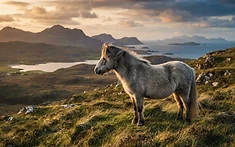
A Highland Heritage Saved: Rare Pony Breed Finds New Hope
Conservationists and island communities are rallying to protect the Eriskay pony, an ancient Scottish breed that remains a living link to the nation’s crofting history. Through careful breeding and increased public awareness, efforts are underway to ensure these resilient animals continue to thrive in their native Hebridean environment.
Scotland · 20 hours ago
The Sunshine Digest
One bright email each week — verified good news only, unsubscribe in a click.