Bath Townhouse Exhibition Celebrates Historic Sibling Astronomers Who Remapped the Night Sky
A new heritage exhibition in Somerset honors the pioneering eighteenth-century achievements of brother-and-sister stargazers William and Caroline Herschel. Hosted in their preserved Georgian townhouse where Uranus was first observed, the installation highlights how family teamwork reshaped humankind’s understanding of the solar system.
The story in 20 seconds
20The exhibition is housed inside 19 New King Street in Bath, where William and Caroline Herschel lived between 1777 and 1782.
William Herschel famously discovered the seventh planet, Uranus, from the townhouse garden on 13 March 1781.
The discovery of Uranus doubled the recognized boundaries of the solar system known to science at that time.
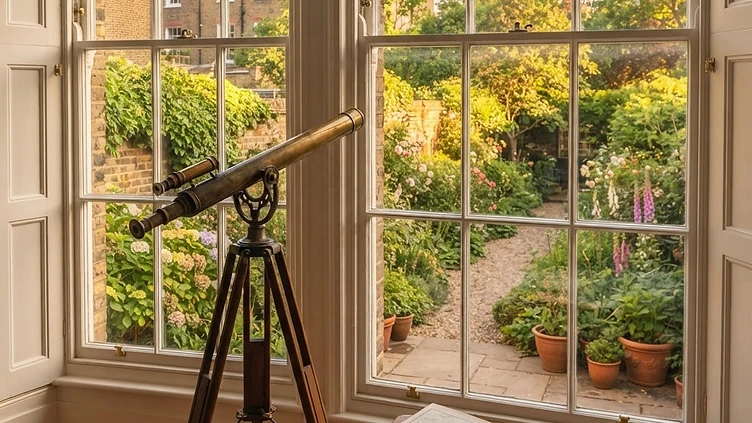
Stargazing in the Heart of Somerset
Tucked away on the historic streets of Bath, a Georgian townhouse holds a secret that once shattered the known dimensions of the heavens. At 19 New King Street, visitors are invited to step back into the late eighteenth century, an era where the boundary between the terrestrial and the cosmic was blurred by the sheer curiosity of two remarkable siblings. The Herschel Museum of Astronomy has unveiled a special exhibition this September 2026, breathing new life into the story of and . This is not merely a display of relics, but a celebration of a partnership that redefined our place in the universe. Managed by the , the museum has undergone a transformation that ensures the legacy of Herschel stands shoulder-to-shoulder with her famous brother, a fitting tribute to a woman whose own scientific brilliance carved a path for generations to follow. Walking through these rooms, one cannot help but feel the resonance of a time when the hum of a hand-polished mirror was the precursor to a leap in human knowledge.
From Melodies to the Infinite
Before they were mapping the nebulae or cataloguing the vast, velvet darkness of the cosmos, the Herschel siblings were deeply immersed in the world of professional music. It is a detail that adds a melodic layer to their scientific pursuits, suggesting that the same discipline required to master a score was applied to the meticulous tracking of celestial bodies. Living at the Bath residence between 1777 and 1782, William turned the domestic space of their home into a rigorous laboratory. He was a craftsman of the highest order, constructing his own reflecting telescopes by hand. The workshop within the property became a place of tireless industry, where William spent countless hours painstakingly polishing metal speculum mirrors until they could capture the faintest glimmer of light from the deep reaches of space. This spirit of innovation is at the heart of the current exhibition, which seeks to illuminate the domestic realities that underpinned such profound scientific breakthroughs. It is a story of grit and ingenuity, where a workshop in a quiet Somerset town became the birthplace of modern discovery.
The Night the Universe Doubled
Perhaps the most exhilarating chapter of the Herschel story took place in the garden behind the house on a crisp night in March 1781. It was there, peering through his homemade equipment, that first identified the seventh planet, . The impact of this moment cannot be overstated; the discovery essentially doubled the recognized boundaries of the solar system as it was understood by the science of the time. The site today features specially commissioned decorative stonework that marks the exact vantage point from which this historic observation occurred, allowing visitors to stand exactly where history was written. The prestige that followed was immense, with William being appointed to in 1782. Yet, while William’s name often dominated the early narratives of this discovery, the exhibition is careful to spotlight the equally vital contributions of his sister. Caroline Herschel was not merely an assistant; she was an accomplished observer whose own prowess in the field was extraordinary.
A Legacy of Equality and Vision
The narrative of the Herschel Museum has been thoughtfully curated to ensure that Caroline receives the recognition her talent demanded. In 1786, she discovered her first of eight comets, cementing her position as a formidable astronomer in her own right. By 1787, her dedication was acknowledged by King George III, who granted her an annual pension of fifty pounds. This act was historic, marking the moment Caroline became the first woman in Britain to receive a salary for scientific work. It is a poignant reminder of the barriers she shattered, and the exhibition highlights this with grace, underscoring her role as Britain's first professional female astronomer. The decision of the museum to drop 'William' from its title was a deliberate and inclusive step to ensure that the partnership between the two is viewed as an equal one. As the museum marks its history since its 1981 opening, it stands as a testament to the fact that scientific progress is rarely a solitary endeavor. It relies on the collaborative spirit, the shared hours of observation, and the support of family. For visitors in 2026, the exhibition serves as an optimistic bridge to the past, reminding us that with enough curiosity and dedication, the mysteries of the night sky are always within reach. By shining a light on this Georgian townhouse, the museum not only honors the Herschel legacy but inspires a new generation to look upward, knowing that even from the confines of a small garden, one can change the way humanity understands the stars.
Originally reported by
All rights in the original reporting remain with the publishers below.
Originally reported by theguardian.com. Our feature is written independently from verified facts — please support the original reporting:
Read the original storyRelated Wins

 Sport
SportCHESS PRODIGIES BREAK BARRIERS IN NATIONAL LEAGUE DEBUT
The 'She Plays to Win' Lionesses have made history by competing in the top division of the Four Nations Chess League, marking the culmination of three consecutive promotions. Despite facing unique regulatory challenges regarding team composition, the squad continues to demonstrate exceptional skill and camaraderie at the highest level of British chess.
London & South · 3 hours ago

 Science
NEW PATHWAYS TO DIAGNOSIS: CAMBRIDGE STUDY SHEDS LIGHT ON AUTOIMMUNE HEALTH
A landmark study from the University of Cambridge is paving the way for more accurate medical care by highlighting critical gender disparities in the diagnosis of autoimmune conditions. By identifying how and why these misdiagnoses occur, researchers are providing the evidence needed to ensure patients receive faster, more effective support for their physical health.
London & South · 3 hours ago

 Environment
A NATURAL REVIVAL FOR BARNES GREEN
A major river restoration project has successfully transformed the Beverley Brook at Barnes Green into a thriving, natural habitat. This initiative has introduced a meandering river channel and a new island, significantly boosting local flood resilience and biodiversity.
London & South · 9 hours ago
The Sunshine Digest
One bright email each week — verified good news only, unsubscribe in a click.