A NEW MELODY FOR NATURE: AI HELPS BIRDS RECLAIM THEIR SONGS
Scientists are deploying artificial intelligence and acoustic tutoring to help fledgling birds learn the complex songs necessary for survival and mating. This innovative conservation approach aims to preserve unique avian dialects that are at risk of disappearing as populations decline.
The story in 20 seconds
20Birdsong is a learned behaviour, not an innate one, requiring exposure to adult tutors.
Many songbird species develop distinct regional dialects similar to human language variations.
Population declines often lead to a "cultural bottleneck" where young birds fail to hear the correct songs.
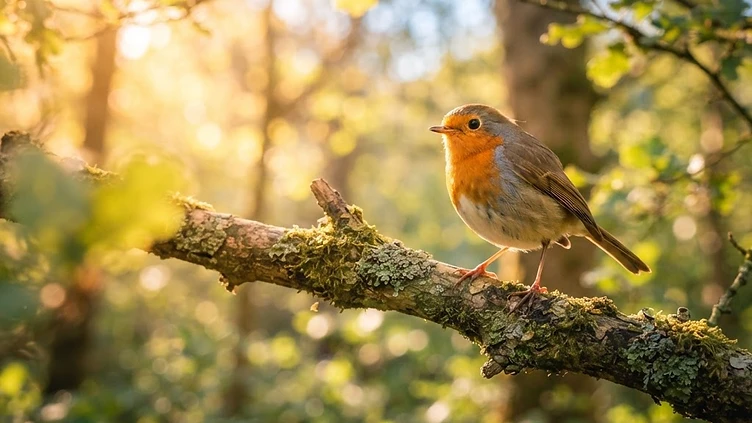
A Symphony Revived in the London Skies
Across the leafy boroughs of London and the rolling landscapes of the South, a quiet revolution in wildlife conservation is unfolding. As we head into October 2026, a dedicated team of UK-based ornithologists is bridging the gap between cutting-edge technology and the delicate, ancient traditions of the natural world. Their focus is not on trees or hedgerows, but on something far more ethereal: the music of our songbirds. In a pioneering effort to ensure that the dawn chorus remains as rich and complex as it was for generations past, are using artificial intelligence to help fledglings reclaim their species-specific calls. It is a heartwarming reminder that in the right hands, technology can be a powerful guardian of our living heritage.
Understanding the Language of the Wild
For many of us, is simply a joyful soundtrack to a morning walk, but for the birds themselves, it is a sophisticated language essential for survival. Crucially, researchers have highlighted that birdsong is not an innate trait; it is a learned behaviour. Just as a child learns the nuances of their mother tongue, a fledgling songbird must be exposed to adult tutors to master its own complex dialect. These songs are more than mere aesthetics; they are the primary tools used by birds to defend their territories and ly attract mates. When a young bird fails to learn its species' signature melody, its future is significantly compromised.
However, as s decline, our songbirds are facing an invisible crisis: a cultural bottleneck. When there are too few adults to pass on the torch, the chain of learning is broken. Many species develop distinct regional dialects, much like human language variations, and these unique local markers are currently at risk of fading into silence. Without intervention, we face the permanent extinction of these delicate avian cultures, which are as vital to our biodiversity as the physical presence of the birds themselves.
The Role of AI in Conservation
To combat this growing loss, have turned to the power of artificial intelligence. By tapping into extensive archival data, researchers are using AI algorithms to meticulously reconstruct fragmented or entirely lost song patterns. This process is far more than a digital recording; it is a sophisticated reconstruction of what has been lost. The goal is to ensure that these AI-generated tutors perfectly reflect the nuances of natural song, preserving the authentic character of each species' unique heritage.
This reconstructed music is delivered through a process known as acoustic tutoring. High-fidelity recordings are played to captive and wild-living fledglings, effectively providing them with the virtual mentors they need to learn their specific vocal repertoire. The research is deeply rooted in the fascinating parallels between human language acquisition and avian vocal learning, suggesting that the sounds we once thought were purely instinctual are actually a shared, cultural legacy passed down through generations.
A Bold Step Towards Restoration
This initiative marks a significant turning point in how we approach environmental protection in the UK. Historically, conservation has focused almost exclusively on preserving habitats. While the physical environment remains vital, this project represents a bold shift toward active behavioural restoration. It acknowledges that for a species to thrive, it must be able to communicate effectively within its own community. The scientists involved are not just looking to increase numbers; they are working to secure the survival of a cultural identity that has evolved over thousands of years.
Success in this field is being measured by the most tangible indicator possible: the ability of these birds to integrate into wild flocks. By carefully tracking the fledglings as they grow, the researchers are observing how well they adapt to their peers, successfully navigate the social landscape of their territory, and attract partners. Early observations suggest that by providing these birds with the acoustic keys to their community, we are significantly boosting their chances of becoming healthy, contributing members of their wild populations.
An Optimistic Horizon for Our Birds
Looking ahead, the implications of this project are incredibly hopeful. By blending the precision of AI with the biological necessity of avian learning, we are witnessing a new lease on life for vulnerable species. It is a testament to the fact that when we identify the precise mechanisms of a population's decline, we can develop targeted, compassionate solutions that preserve the richness of the natural world. As the autumn days grow shorter, the work being done in London and the South continues to offer a promising blueprint for conservation.
There is a profound comfort in knowing that the songs of the future are being safeguarded today. By valuing the 'cultural heritage' of these creatures as much as their physical survival, we are ensuring that the tapestry of the British countryside remains vibrant and resonant. This is a story of human ingenuity stepping in to protect the very essence of nature, promising that the melody of our mornings will be heard by generations to come.
Originally reported by
All rights in the original reporting remain with the publishers below.
Originally reported by Trill seekers: can scientists use AI and tutors to help birds remember lost songs?. Our feature is written independently from verified facts — please support the original reporting:
Read the original storyRelated Wins

 Environment
URBAN NATURE’S FORTUNES REVEALED THROUGH HISTORIC TURF SWAP
A fascinating ecological experiment has highlighted the shifting state of British biodiversity by comparing soil samples taken from Kensington Gardens four decades apart. The project demonstrates how urban and rural environments have evolved in their capacity to support diverse plant life since the early 1980s.
London & South · 1 hour ago

 Health
Kingston won't enforce ban on plastic decorations at cemetery to protect environment
A local ecologist and Kingston Council have launched a collaborative environmental initiative to preserve the biodiversity of a historic cemetery by reducing plastic waste, focusing on education over enforcement.
London & South · 7 hours ago

 Culture
Lee Child backs launch of reading scheme to send prisons half a million books
A major new initiative led by author Lee Child is distributing nearly 500,000 books to prisons across the UK to improve literacy levels and support offender rehabilitation as part of the National Year of Reading 2026.
London & South · 7 hours ago
The Sunshine Digest
One bright email each week — verified good news only, unsubscribe in a click.